18 Chait, Kathmandu. CPN-UML, which has started a protest against the arrest of party president KP Sharma Oli, is not able to bring its own leaders-activists to the streets properly.
Although it is said that the political protest will be made nationwide through the demonstration, there are indications that the challenge to the government from the streets will not work.
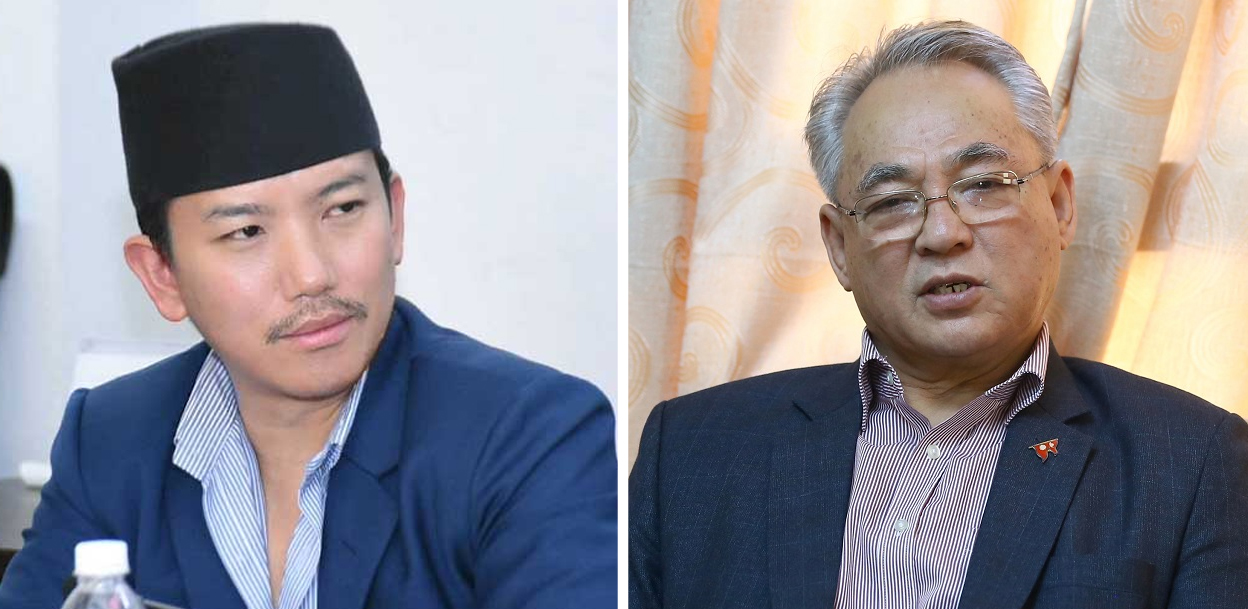
Amidst this depressing background, there was an unexpected crowd of young people at the CPN-UML headquarters in Chasal on Wednesday afternoon. The magnet that drew the youth to the party office was Suhang Nemwang, a young UML MP.
Suhang announced that he would run against the plan of the party leadership (including President Oli) to elect Ram Bahadur Thapa ‘Badal’ unopposed as the leader of the UML parliamentary party. This courage shown by a young MP against the ‘decree’ of the leadership added enthusiasm to many youths in the UML circle.
However, what was seen in Chasal was the most ugly picture of the current tragedy of the Nepali communist movement. Nemwang could not get a single proposer and supporter to run for the parliamentary party leader.
‘Competition’, which is considered the lifeblood of democracy, has become harmless there. Deputy Secretary General Yogesh Bhattarai expressed his public objection saying that MPs were being pressured not to become supporters and proponents.
As a result, Ram Bahadur Thapa ‘Badal’, who came from a Maoist background, was elected unopposed as the leader of the UML parliamentary party and became an MP.
This incident has once again created waves within the UML.
Party Secretary Yogesh Bhattarai publicly expressed his displeasure. He said, ‘When the party has suffered a serious blow from the election and the entire movement is facing multifaceted adversity, the way and style adopted to select the leader of the parliamentary party today has made the entire party ranks more worried. Whatever was done by putting the MPs under pressure, it was not good.’
Swaviyu President of Amrit Science Campus, Rudrahari Pokharel, wrote on social media, ‘This behavior of UML, which does not change its leadership and style, is not acceptable to conscious youth. Slavery that considers those who did not win elections as leaders cannot represent the youth.’
It is not that Ram Bahadur Thapa Badal won or Suhang Nemwang lost. The point is how democracy within the UML has shrunk to the point that Suhang could not even get a proponent or a supporter.
Why do the leaders who criticize the leadership bitterly in the tea shop, when they come in front of the party officials, do they fall like snakes in front of the eagles? To find the answer to this, the history of the communist movement should be studied.
Leaders forced to lead double lives
It seems that being a leader-activist in the UML (and the entire Nepali Communist movement) means living two lives.
It is to make two contradictory arguments on the same fact. To live as a ‘sad soul’ inside.
This is called ‘cognitive dissonance’ in the language of psychology. Workers know that the leadership’s decision is wrong, it will damage the party. However, they are saying in public, ‘This is the visionary and best decision of the leadership.’
To reduce this conflict between their internal beliefs and external actions, they drag themselves in the path of ‘bhakti culture’ i.e. devotion, saying ‘maybe I was wrong, the president is right’.
This decline was not sudden. As the French Marxist philosopher Louis Althusser put it, this is the success of the ‘ideological apparatus’ of the state or party.
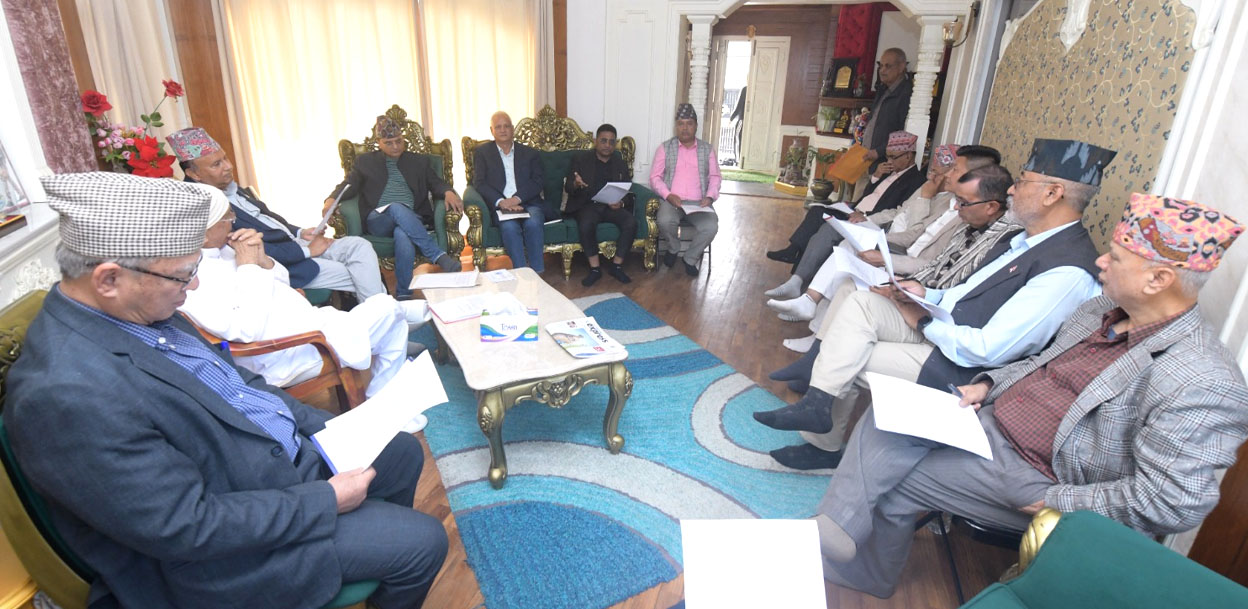
When power is centralized in the party, party schooling, training and mouthpieces construct leadership praises of ‘integrity’ and questioning of ‘indiscipline’.
As the keys to tickets, positions and opportunities are in one person’s pocket, activists transform into unquestioning ‘modern slaves’ to preserve their political survival.
The reason why Suhang Nemwang did not get a proposer is nothing else but the fear of losing the same ticket and opportunity among MPs.
The ‘Iron Law of Oligarchy’, propounded by the sociologist Robert Mitchells in 1911, applies precisely to the UML today – no matter how democratic the organization may be, it eventually comes under the control of a small group and the general membership is forced to become silent followers.
Formalization of methods and procedures
Today, competition is not preferred in the party where Madan Bhandari established the philosophical belief of ‘becoming superior through competition’.
Due to the practice of limited leaders who lost the election, working at the behest of the detained party president, the democracy within the party was ‘hijacked’.
It’s not just about the results, it’s about the formalization of the method. The issue is not who won or lost the election, but how the newly sworn in MPs ignored the voice of the electorate who cast their votes so quickly.
Also, the UML legislative convention held before the Genji movement failed to listen to the community’s footsteps. In the earlier Chitwan (Narayangadh) convention, democracy was limited to the formalization of ‘settings’ and where the fate of Bhim Rawals has not been forgotten by today’s generation.
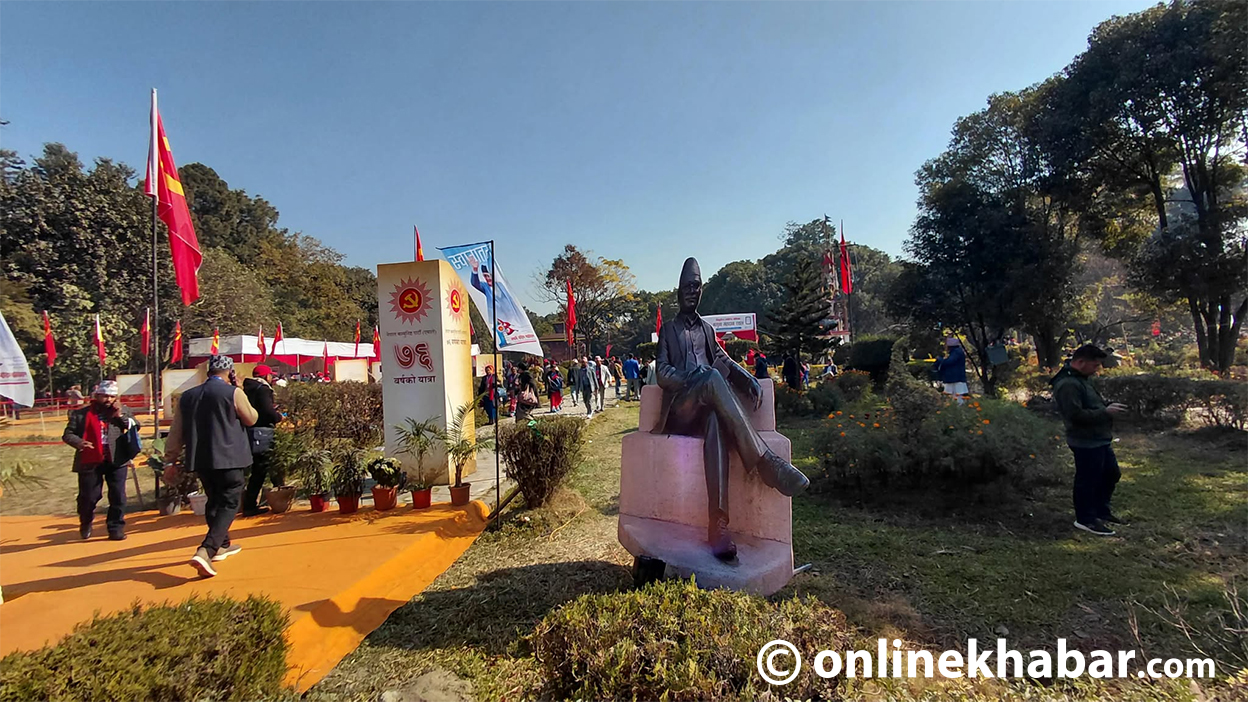
From 2051 to 2062, the UML, which carried out an ideological struggle with the warring Maoists with the agenda of ‘democratization’, has now turned its back on the question of democracy. Is the image of UML’s democratization running towards Stalin’s era, which emerged in the Soviet Union after Lenin?
At that time, there was a physical purge of those who had different opinions, now there is a political purge. The Ghanshyam Bhusalas are unattainable, the Bhim Rawals are sidelined, and the Suhang Nemwangs find no supporters.
It should be considered a coincidence, the cloud that came from the gun politics yesterday has reached the acting leadership not only of the parliamentary party but also of the parliamentary party after the arrest of President Oli.
Badal will now give the philosophical explanation of UML, which raised the flag of democratization of the communist movement, from Chasal. Because, he was also elected by Oli’s ‘Nigah’.
There is a need to attract young people. There is a style of action – cutting the path of the youth. Even if the people elect, the party will not elect. Not to be chosen.
Surendra Pandey, the intellectual leader of UML, says that the parliamentary party leader selection process has made it clear that internal democracy within UML has weakened and narrowed.
“It is shameful for the democratic party to create an environment where a promising young parliamentarian tries to compete and does not get proponents and supporters,” he wrote on social media.
His conclusion is that such an oppressive trend will only push the organization towards decline, not dynamic.
‘Even in today’s state of 9 seats, if Chet doesn’t open, when will it open?? Now it’s clear – The old pattern and factional siege will not run the UML anymore,’ Pandey writes‘Someone’s party ‘private club‘ no, Bold changes and a new roadmap are essential to create a common organization of common workers and people.‘
The destiny of ‘planting dragons and growing saffron’
Even after this level of electoral defeat, the indolence and arrogance of the UML leadership recalls an interesting context of the European communist movement 135-40 years ago.
In the early 1890s, there was a wave of youth calling themselves ‘Marxists’ in Germany and France. However, they neither knew the depth of historical materialism, nor did they apply it in real life. They only wore the garb of ‘Marxism’ to rise quickly in position, prestige and the party.
Friedrich Engels, a colleague of Karl Marx, was deeply disgusted by their ideological hollowness and unnecessary arrogance. In a letter to Paul Lafargue in 1890, he quoted the famous German poet Heinrich Heine as saying: ‘I planted dragons and I grew up.’
In Greek mythology, there is a myth that ‘planting a dragon’s tooth produces mighty warriors’.
Engels compared the opportunistic and self-righteous followers of Marxism to ‘upians’. Marx himself was so fed up with the fanaticism and formulaic style of the so-called Marxists in France that he said in a whisper – ‘(If this is Marxism) I only know that I am not a Marxist!’
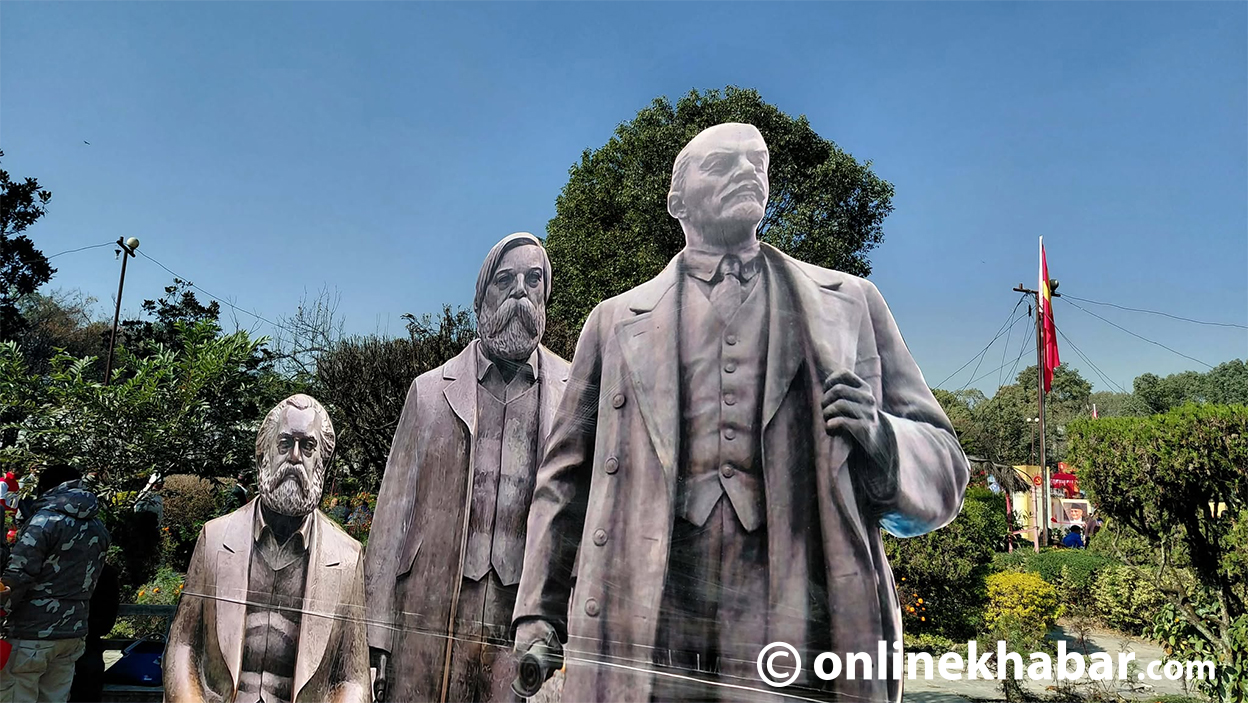
Marx’s statement was not a rejection of Marxism, but rather a strong warning against simplification of thought, mechanization and abuse of power.
However, today, after 135 years, the fate of Marxists in Nepal seems to be exactly the same. President Oli said publicly about the convention, ‘I speak, the convention is over.’
But there was no leader left in the party who could counter it ideologically. It indicated the loss of critical consciousness within the UML.
Even though the credibility of the party has fallen to the ground due to such a big setback in the elections, the UML leadership has not shown interest in listening to the society. Secretary General Pokharel is still playing the role of ‘Damn-Master’ by deceiving his critics on Facebook.
However, even in such darkness, a small glimmer remains. What Suhang Nemwang did as a representative of the third-fourth generation, is the UML’s attempt to recall the past of democratization. Even though he did not get a proponent or a supporter, he reminded the method and process.
Suhang has dared to raise the flag of rebellion for the UML, which has been reduced to the list of small parties in the parliamentary history of Nepal. His clear message is – if the party is to be saved from the bunch of ‘upians’ and made into a ‘dragon’ in the true sense, the pressure of generation and transformation should be taken care of, the voice of time should be listened to.
His message was – the crowd of youth gathered at the UML headquarters on Wednesday following hope, listen to that hope and voice.