News Summary
Generated by OK AI. Editorially reviewed.
- The World Bank has released a forecast that Nepal’s economic growth rate will be limited to 2.3 percent in the current fiscal year 2082/83.
- The World Bank has said that the ongoing conflict in the Middle East and the protests in August will have a negative impact on Nepal’s economy.
- The director of the World Bank, David Sis, has suggested that Nepal should prioritize improving the business environment, infrastructure development and agricultural business.
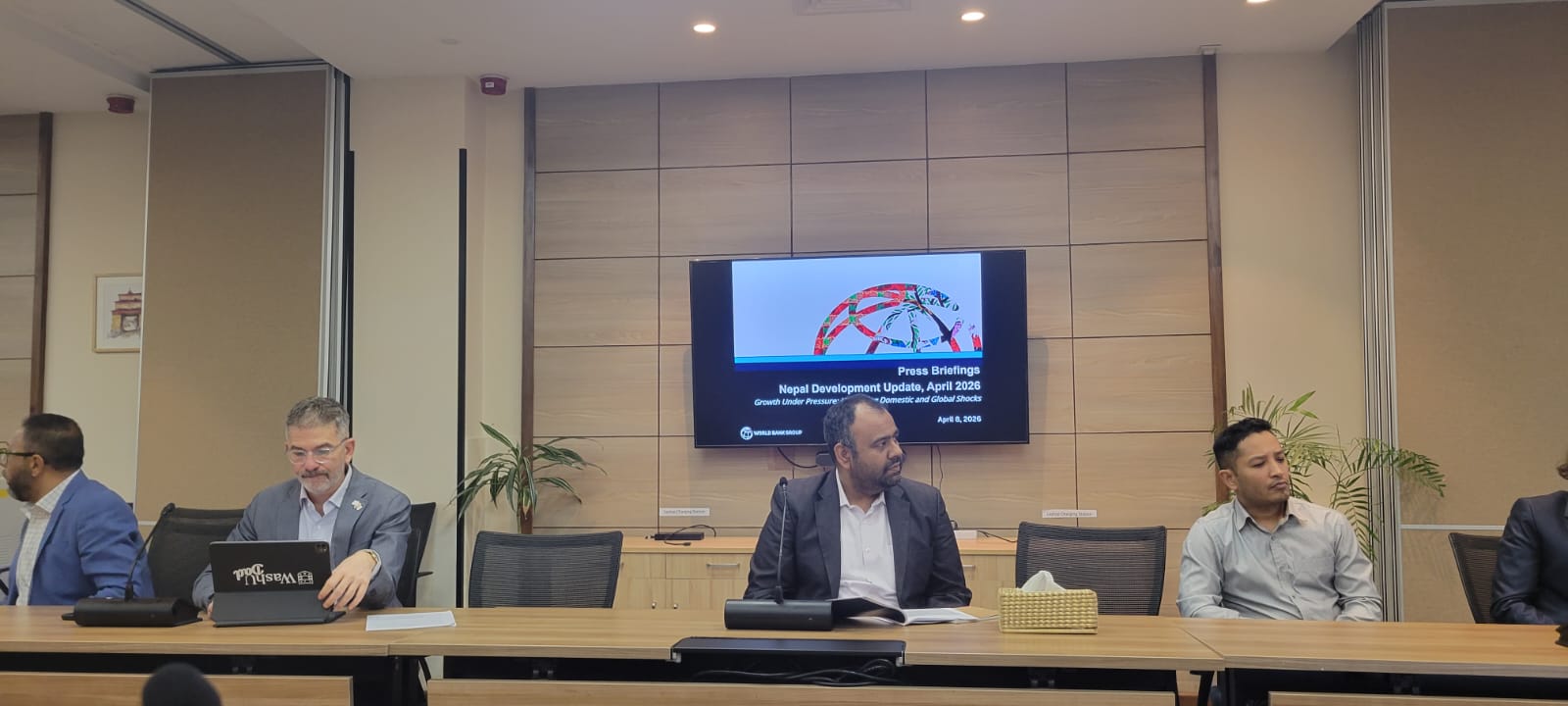
25 March, Kathmandu. The World Bank has predicted that Nepal’s economic growth rate will be limited to 2.3 percent in the current fiscal year 2082/83.
The World Bank Nepal Office announced this while publishing its half-yearly estimate ‘Nepal Development Update April 2026’.
He says that especially the decrease in agricultural production and the impact of war raging in the Gulf countries have also affected Nepal’s economy.
However, with the formation of a new government and work in favor of economic reforms, the situation may improve even more, according to World Bank officials.
The World Bank has also stated that the effects of the ongoing conflict in the Middle East and the protests in August will be seen in the economy. Last year, the economic growth rate was 4.6 percent. The World Bank has estimated that the economic growth rate will reach 4.4 percent in the coming year due to reconstruction, hydropower expansion and local and state level elections.
According to the data released by the National Statistics Office on Monday, there was a 4.05 percent economic growth in the second quarter of the current year. The government has set an economic growth target of 6.5 percent for the current year.
According to the ‘Nepal Development Update’ released by the World Bank today through a press conference, it seems that the service sector will be the most affected in 2026. In particular, the economy has been hit by a reduction in the tourism sector, an increase in transportation costs and disruptions in the supply chain.
The report predicts that if the conflict in the Middle East continues, tourist arrivals will decrease, remittances will decrease and overall economic activity will slow down. However, the report also mentions that political stability and structural reforms can increase the confidence of private investors.
David Sislen, World Bank Director for Maldives, Nepal and Sri Lanka, said that it is necessary to increase the leadership of the private sector for job creation and economic strength.
For this, he suggested that Nepal should give priority to areas such as business environment improvement, infrastructure development, tourism, information technology and agricultural business.
The South Asia Economic Update has shown that the economic growth rate of South Asia will also be affected. The growth rate of 7 percent in 2025 is projected to be limited to 6.3 percent this year. Due to the disruption in the world energy market, it is seen that there will be some slowdown in the growth rate of this sector.
The World Bank predicts that the growth of South Asia will continue to be faster than that of other developing countries. The World Bank has also asked to focus on areas such as urban development, tourism and digital services to increase employment and bring transparency in business regulations.