News Summary
Generated by OK AI. Editorially reviewed.
- Prime Minister Balendra Shah is yet to address the House of Representatives and Parliament wants to know his vision and policies.
- Parliament has a rule to conduct a live question and answer program with the Prime Minister but he has not yet spoken.
- The MPs are questioning the Prime Minister about the loan approval, publicizing the inquiry commission report and are expecting an answer.
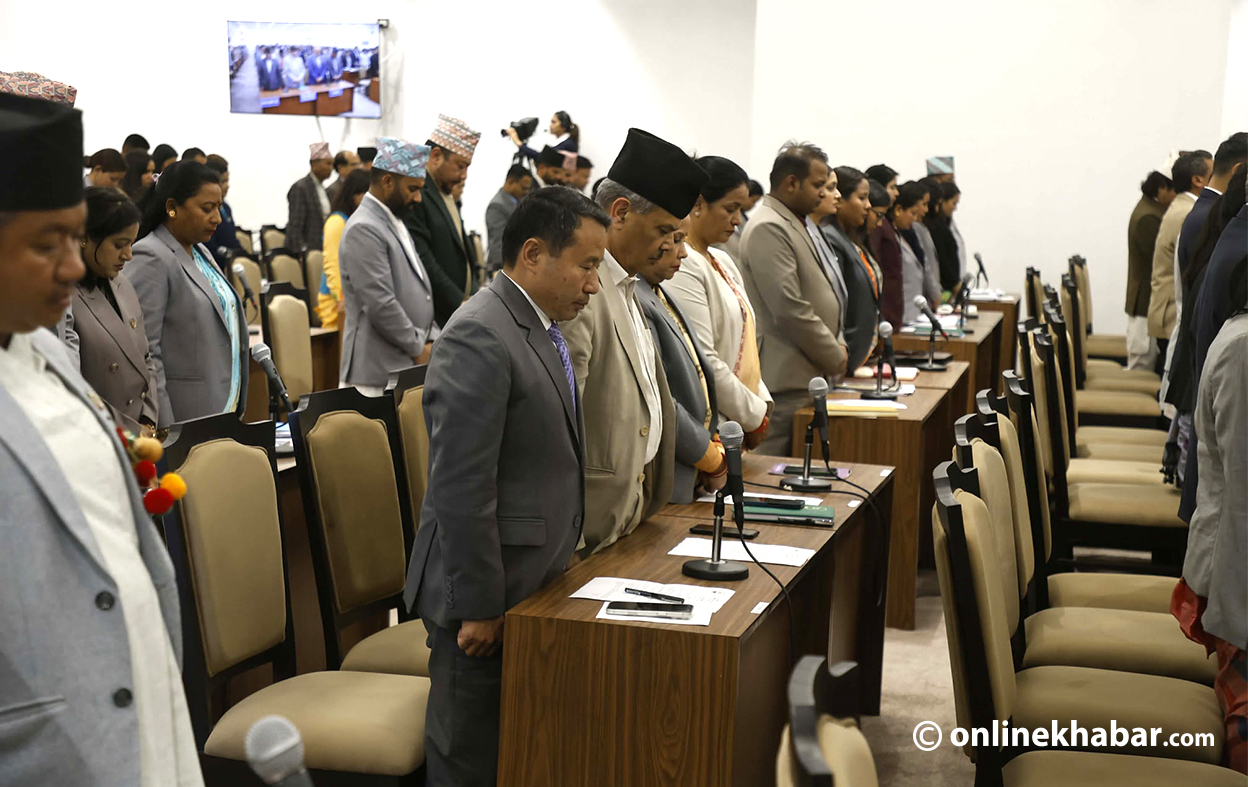
24 March, Kathmandu. It took about two weeks for the senior leader of the party, Walendra Shah, to become the Prime Minister after the National Independent Party won a close two-thirds majority in the House of Representatives elections held after the Genji Movement. Meanwhile, 4 meetings of the House of Representatives were held. In the meeting, the formal views of all party leaders were presented to the House, but Prime Minister Walendra Shah was not heard.
How does the Prime Minister with the support of about two-thirds of the same party want to lead the country in a new context? How will the future of Nepal progress? This curiosity has also started to manifest itself within the House.
In the past, on the day the parliament session started, top leaders of the party would give greetings and the Prime Minister would also speak. It didn’t happen this time. Ravi Lamichhane of Ravi Lamichhane spoke as the chairman of the ruling party on the 19th when the House meeting started. But as the leader of the parliamentary party of the ruling party, Prime Minister Balen could also address. He didn’t.
According to the former Secretary General of the Parliament, Suryakiran Gurung, it is a citizen’s right to get information about where and how such a powerful government is trying to take the country.
What is the overall vision of the Prime Minister? How do you want to move the nation forward? This person wants to hear’ says former Secretary General Gurung, ‘how is the single government with two-thirds majority driving the country? What kind of relief is being given to the people? The Prime Minister needs to clarify this.’
According to Gurung, not only Nepalese people but also others want to hear the Prime Minister’s vision from Parliament. What will Nepal’s foreign policy be like now? What is the economic policy? The world community is waiting to see what the Nepalese government’s approach will be in this regard.’
Gurung also suggested to the Prime Minister to address all kinds of concerns that have arisen and may arise in the Parliament on issues ranging from foreign relations to economic policy and relief that citizens can get.
“Standing on the rostrum of the Parliament, the Prime Minister should speak, speak,” he says, “address the issues that have arisen in the Parliament and may arise in the future.” So, what is the Prime Minister’s point of view? Common citizens to know how the country is progressing.’
On the day the parliament session started, constitutionalist Dr. Bipin Adhikari commented that the Prime Minister’s lack of a speech seemed to have caused something to happen. In today’s first meeting, the leader of the Parliament also had the right to give a brief address to the Prime Minister. This year, the ruling party chairman and the prime minister were different people, so it was necessary. Many felt as if the Prime Minister was absent. However, let’s hope that the Prime Minister will demand that right after the Speaker’s election.’
In the past, when the president of the party from other parties was the leader of the parliamentary party and the prime minister, even if he stood on behalf of the party leader in Rostum, the opinion of the prime minister would come. But this time, since the party president and the prime minister are different, experts say that it would be right for the prime minister to bring his opinion through an address.
What is the preparation of the Prime Minister?
Meetings of both the Houses of Representatives and the National Assembly have been ongoing since March 19 at the call of the Federal Parliament. Officials of the Prime Minister’s Secretariat say that Prime Minister Balendra will address Parliament at an appropriate time.
In response to the question of ‘When will the Prime Minister address the Parliament’, Chief Private Secretary of the Prime Minister Suwash Sharma says, ‘There is no immediate preparation.’
According to the Secretariat of the Federal Parliament, the Prime Minister can address the Parliament whenever he wants or put his words. The Prime Minister does not have to enter any time and agenda to speak.
In addition, the House of Representatives rules state that a direct question and answer program with the Prime Minister will be conducted in the House of Representatives one day every month.
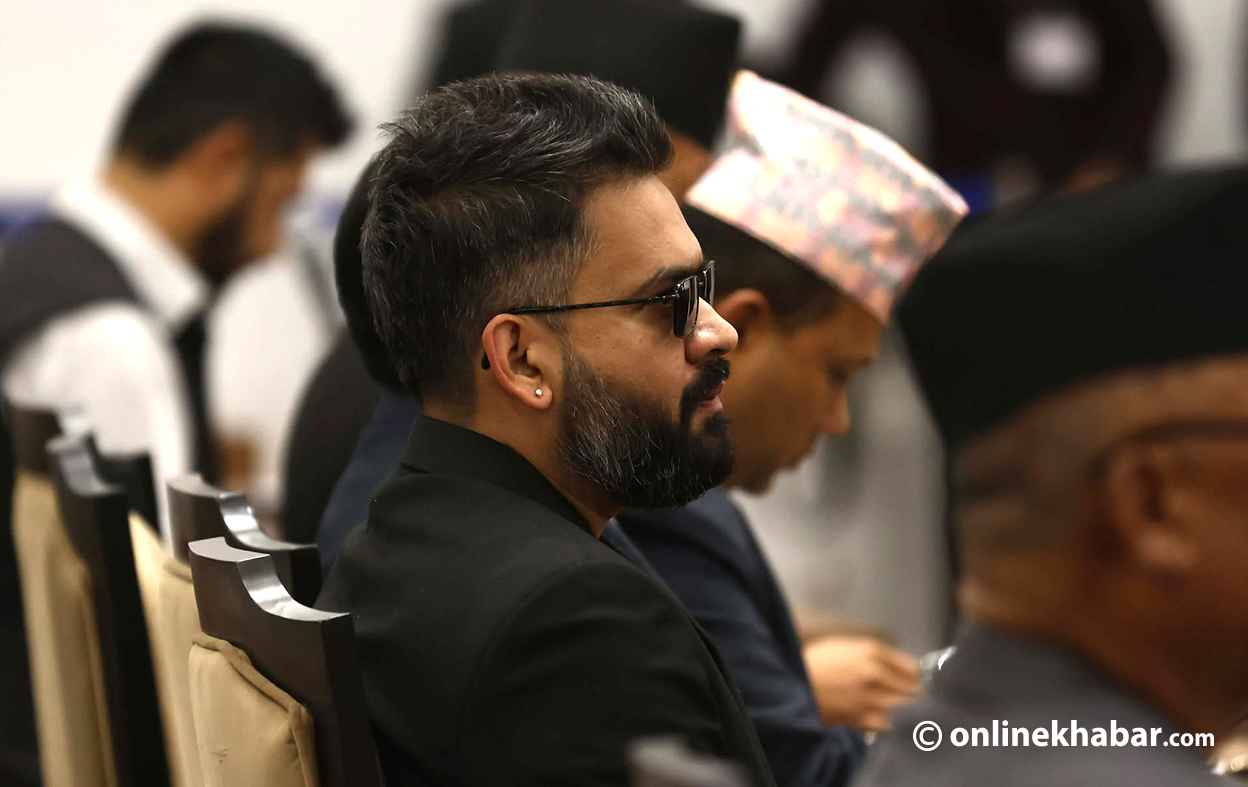
Rule 56 of the Rules of the House of Representatives states, ‘The Speaker shall determine the first hour of the meeting on any one day of the first week of every month to ask questions on important matters directly related to the Prime Minister or his area of work.’
There is a similar arrangement in the National Assembly.
Rule 55A of the National Assembly Regulations. It is said, ‘The chairman can determine the first one hour in the meeting of the third week of every month to ask direct questions to the prime minister or the prime minister on important issues directly related to his field of work.’
The Prime Minister can also address the direct question and answer program with the Prime Minister as a time to present his views.
‘The search for the Prime Minister is going on in Parliament’
Speaking at the meeting of the House of Representatives last Monday, Khushbu Oli, MP of Rashtriya Prajatantra Party (RASWPA), questioned the government’s decision to accept loans from the Asian Development Bank and the World Bank.
‘We want to ask – on the basis of which parliamentary committee, which policy debate and which needs prioritization assessment was this size decision taken?’ Oli has a question.
The cabinet meeting held last Sunday decided to accept concessional loans worth 90 million US dollars for the Digital Nepal Transformation Project. On the same day, it was decided to accept a concessional loan worth 95 million US dollars from the World Bank for sustainable and inclusive projects.
In the past too, the government used to take subsidized loans. Why should the government respond when there is a decision of the same nature this time?
This is where MP Oli doubts, ‘Our parliament is still in its infancy. Parliamentary committees and sub-committees have not been formed. In such a situation, there is a possibility that the government’s decision made on a small scale may not be transparent.’
He still has a question about the process of getting the loan, ‘Did we ask for the said loan? Or was there an offer on us? Is it an offer loan or a requested loan? Why were those projects chosen?’
Now the government has to answer these questions to the parliament. There are also other questions asked in the Parliament with the name of the Prime Minister.
Speaking at the meeting of the House of Representatives on March 19, Nepali Congress MP Bhishmaraj Angdambe said, ‘I would like to draw the attention of the Prime Minister – will the government itself publish the report of the inquiry commission or will the government also read it in the Gorkhapatra?’
The Genji movement took place on the 23rd and 24th of last year. 76 people lost their lives during the protest. During the agitation, there was arson and vandalism in public institutions and private properties including the Parliament Building, Supreme Court, Singh Darbar, etc.
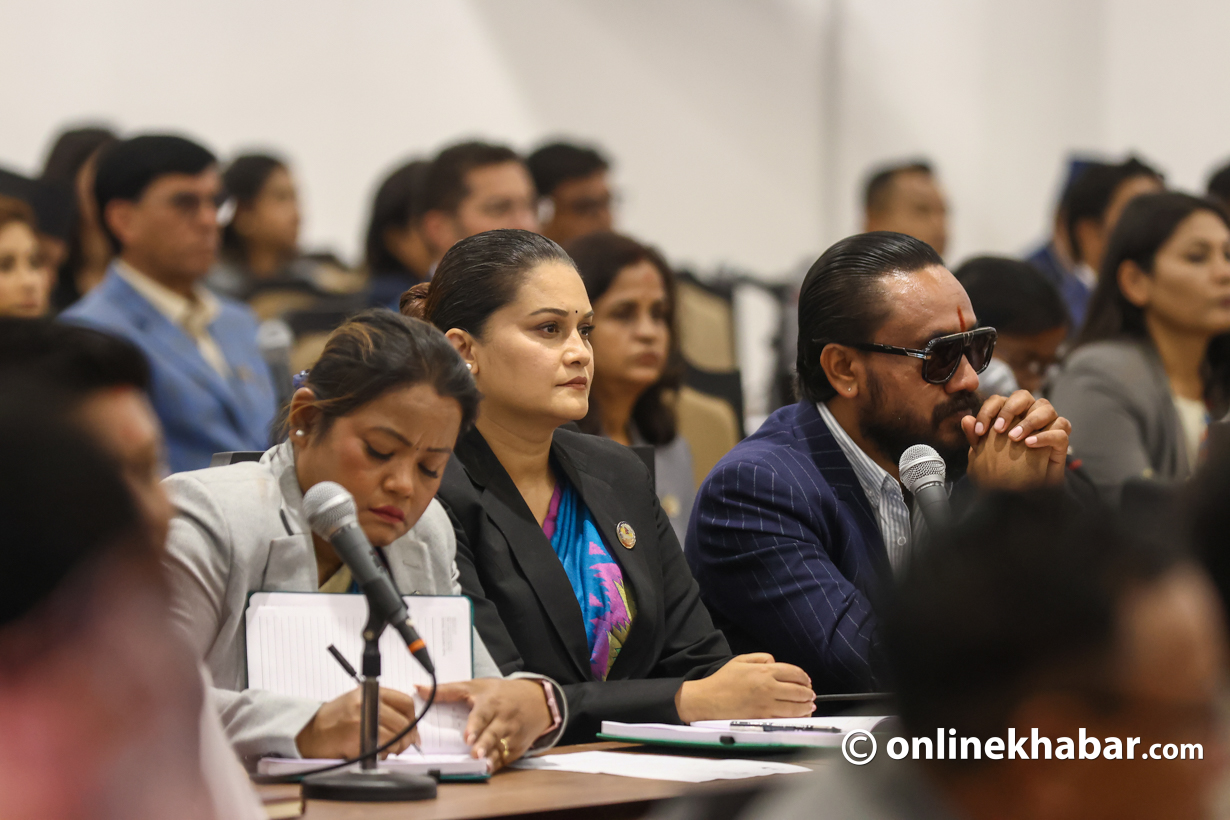
The commission of inquiry led by former judge Gauri Bahadur Karki has submitted its report to the government.
The report received by the government on February 24 has not been made public. Instead, the government has already implemented the report. Although the report has not been officially published, the media has published its details.
However, MP Angdambe asked Prime Minister Balendra whether the government will publish the report of the inquiry commission or not. Along with this, he said, ‘It is necessary to deal with the incidents of both August 23 and 24 one by one.’
It is not certain when Prime Minister Balendra will answer these questions raised in Parliament. The parliamentarians are keeping their expressions in mind of the Prime Minister.
Speaking at the meeting of the National Assembly on Monday, Nepali Congress MP Ranjit Karna proposed cooperation with the government as an agenda. ‘I request the Prime Minister – come, let’s do national unity and cooperate for this. Let’s prepare agendas’, he said, ‘Opinions can be different until the election, parties can be different. After the election, everyone has the same goal – a prosperous Nepal, a respected Nepali.’
According to Karna’s proposal, whether the government is ready to cooperate with the opposition parties in terms of agenda or not, it will be known after Prime Minister Balendra’s reply.
The government’s commitment has also been demanded regarding the relationship between the parliament and the government.
RSVP MP Manish Jha has sought a guarantee that Parliament will not be closed from Baluwatar. Speaking at the meeting of the House of Representatives on Monday, he recalled the past, ‘The previous House was confined to Khumaltar, Baluwatar and Balkot. Only the numbers were counted, the theory remained weak.’
As Khumaltar, Baluwatar and Balkot, Jha referred to former prime minister trio Pushpa Kamal Dahal ‘Prachand’, KP Sharma Oli and Sher Bahadur Deuba. Prachanda lived in Khumaltar and Oli lived in Balkot. Baluwatar was referring to the then Prime Minister’s official residence.
In other words, MP Jha insists that Baluwatar, that is, the Prime Minister should not intervene again in the Parliament.
RSVP MP Ganesh Parajuli, does the principle of separation of powers care or not?, Will the government listen to MPs or not?, Will there be pre-budget discussions on time or not? MP should knock on the minister’s door! Interest groups dominate the law making! He asked that. He has sought a promise that the past will not be repeated, saying that the dignity of the Executive, Legislature and Judiciary cannot be protected separately.
Speaking at the meeting of the House of Representatives on Monday, Parajuli raised these issues. He did not take the name of the Prime Minister. However, he advised the government to listen to the MPs. He said, ‘All the problems, suggestions and voices of the people raised by the parliamentarians on behalf of the people at emergency time, zero time and special time should be heard addressed by the state agencies and the ministry in a timely manner.’
“All things should be completed after they are placed in the Parliament,” said Parajuli, a member of the RSVP.
The Prime Minister will have to address these questions and inquiries while standing at the rostrum of the Parliament. So that Prime Minister Balendra himself can take Parliament into confidence.