News Summary
Generated by OK AI. Editorially reviewed.
- The government has decided to impose stricter regimes and public holidays to control fuel consumption due to conflicts in West Asia and the impact on dollar reserves.
- The Cabinet has decided to give 50% discount on customs duty and infrastructure development tax on petroleum products.
- Federation of Nepal Transport Professionals has suggested that the Zorbijor system should be applied to private vehicles in the first phase and public transport should not be affected.
24 March, Kathmandu. Keeping in view the rising conflict in West Asia, the increasing pressure of imports and the impact on dollar reserves, the government has started adopting various strategies to control fuel consumption.
Nepal Oil Corporation, the monopoly agency of fuel sales and distribution, submitted various proposals to the government to find suitable alternatives after the price of petroleum products increased due to the escalation of war in West Asia.
As the financial deficit continues to increase, the corporation has been making a formal appeal to the general public to consume less fuel (adopt frugality). After the loss reached a point where it was unsustainable, the corporation proposed options to the government to reduce the consumption of petroleum products.
The Corporation had submitted a proposal to the government to implement a zoning system for vehicles, two days off (public holiday) during office hours, closing schools and colleges and implementing a quota system (rationing).
In addition to reducing consumption, the corporation also demanded that the government give tax breaks for economic management.
After the corporation’s proposal, the government has decided to give public holidays on Sundays, start the academic session only from May 15, control wholesale sales and reduce the fuel quota of high-ranking employees in order to reduce consumption.
The Council of Ministers on Tuesday has decided to give 50 percent discount on customs duty and infrastructure development tax to reduce the impact on the people due to the increase in the price of petroleum products.
Similarly, to reduce the excessive import of petroleum products and the pressure it puts on the economy, the government has also said that it can implement a ‘forced system’ on vehicles.
Federal Affairs and General Administration Minister Pratibha Rawal indicated that the government is ready to take any measures to control fuel consumption and made it clear that a strict system will be implemented on the vehicles plying on the road as per the need.
While announcing the decisions of the cabinet meeting, Minister Rawal said that the government has put forward various options for managing the fuel crisis.
“We have already taken some steps to control the consumption of petroleum products,” she said.
The government is expecting support from the citizen level to avoid a forced situation where strict rules should be implemented in traffic.
In order to reduce fuel consumption, Minister Rawal made a special appeal to the general public and the private sector to practice ‘work from home’ as much as possible and to increase the use of electric vehicles (EV).
“In the long term, the legal system for EV conversion has progressed, the ethanol policy is being prepared and the government is committed to the development and expansion of EV infrastructure,” she said.
This step, which directly affects the daily life of common citizens to the overall economy, was also implemented in the past during the crisis, which played an important role in reducing fuel consumption.
Practicing a rigorous system
Zorbijor system in Nepal is becoming synonymous with fuel crisis, epidemic and special situation management. The previous governments have also been using this system as the easiest tool to reduce fuel consumption and control traffic during times of crisis.
In the history of the country, the most powerful and long-lasting system to reduce fuel consumption was during the Indian blockade of 2072.
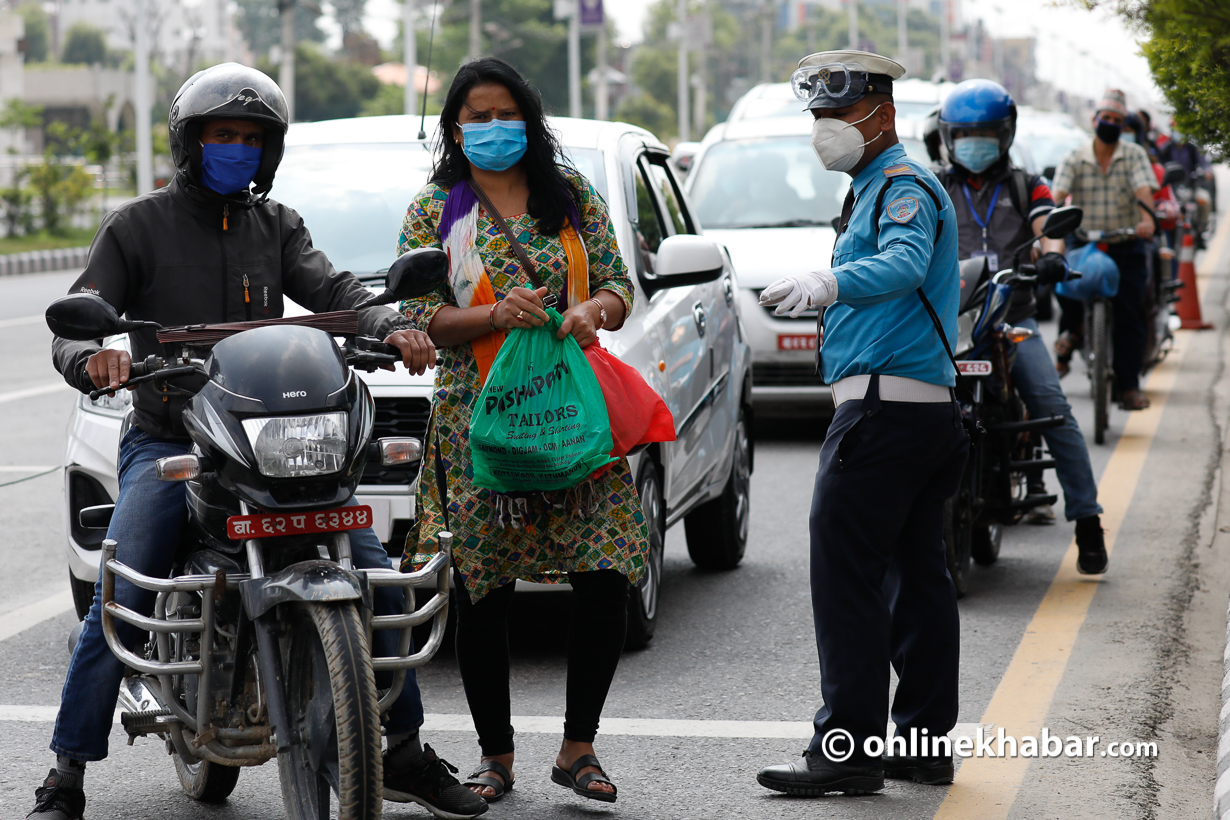
Due to the undeclared embargo imposed by India after the promulgation of Nepal’s new constitution, an extreme shortage of petroleum products was created across the country. In order to manage this shortage and to sustain the limited fuel available for a long time, the government had implemented a system of pushing and shoving in private and public vehicles.
After this, ordinary citizens were forced to use public transport and alternative measures. Although the Zorbijor system seems to be effective in reducing fuel consumption and managing special situations, it has created an uncomfortable situation in the daily lives of ordinary citizens.
Jorbijor system positive to avoid fuel crisis
Former Commerce Secretary Purushottam Ojha has taken the preparation of the government to implement the Zorbijor system in vehicles to reduce fuel consumption as a positive and necessary step.
He said that this is one of the effective tools that the government can adopt to manage the rising prices and the fuel crisis.
“It is a good thing for the government to prepare to implement a strict system,” Ojha said.
Mentioning that this is a common practice adopted internationally during times of crisis, he recalled that such a system was implemented in Nepal in the past, but it was stopped by the order of the Supreme Court.
Therefore, he emphasized that the legal and practical aspect should be considered in a thoughtful manner when implementing it now.
However, former secretary Ojha believes that the overall problem will not be solved by the judicious system alone. He said that it should be seen as an important part of the overall crisis management package rather than a mere measure to reduce fuel consumption.
“To make it more effective, the work from home system should be encouraged, the decision to give public holidays two days a week should be implemented and the use of electric vehicles should be promoted,” he said.
He concluded that only if all these measures including helping to convert fuel-powered vehicles to electric ones are implemented simultaneously, fuel consumption will immediately decrease and help save the economy.
Forced system should be implemented immediately: consumer rights activist
Consumer rights activist Madhav Timalsina says that in order to reduce the excessive consumption of petroleum products and the increasing losses, a mandatory system should be implemented in vehicles immediately.
Timalsina said that the government has delayed making this decision and demanded that it be implemented immediately.
“Jorbijor system helps greatly in reducing fuel consumption and deficit and increasing the state’s foreign exchange reserves,” Timalsina said.
Government vehicles and ministerial vehicles should also be reduced
Timalsina emphasized that the government side should also adopt frugality, saying that one should not impose strict rules on the citizens. He said that misuse of government vehicles should be stopped by making public transport more efficient.
“The use of government vehicles other than office work should be stopped, skirting of ministers and prime ministers should also be controlled at this time,” he said.
Mentioning that the current fuel and economic crisis is not only Nepal’s but a global problem, he gave examples of countries like Pakistan and Bhutan also practicing similar practices to conserve fuel.
“This is a global problem beyond the control of the country, so citizens should also be responsible for making it successful,” Timalsina said.
‘If you are going to force it, you should use a private vehicle first’
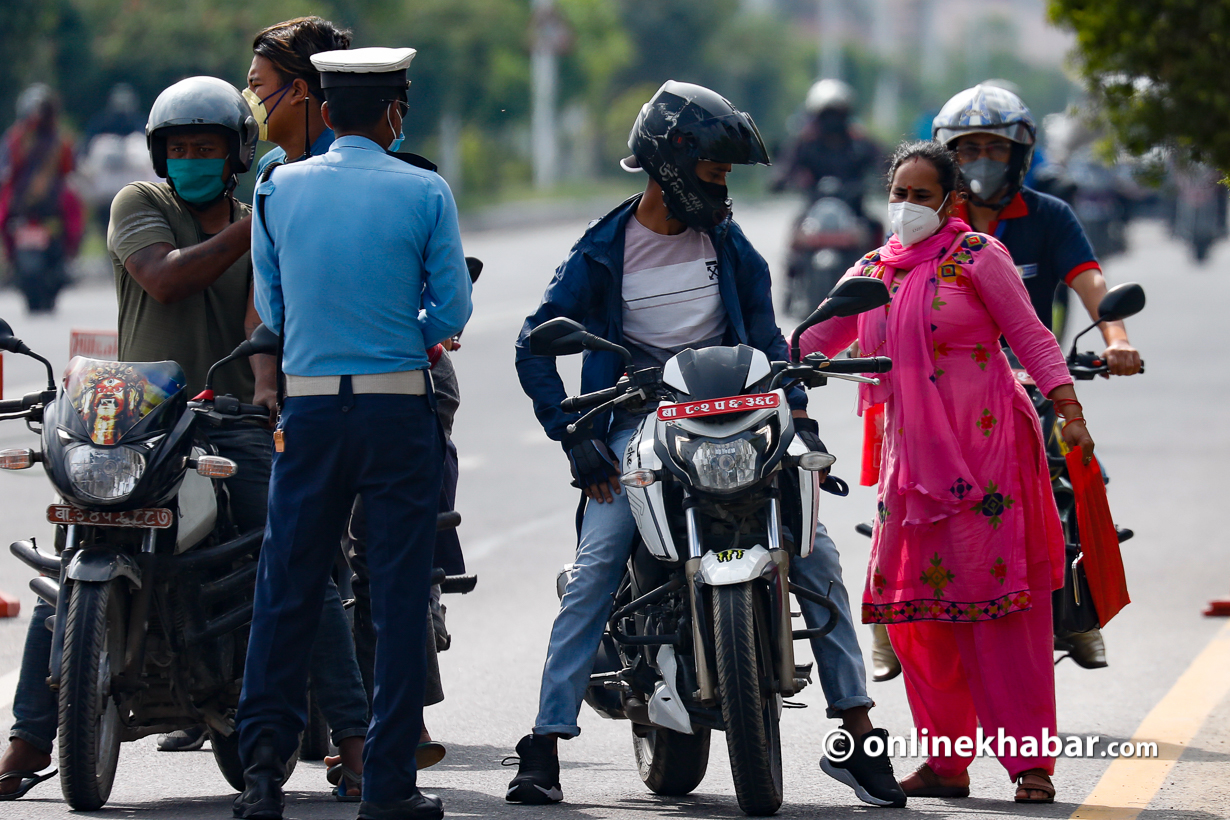
As the government has decided to implement the system by force if necessary, the National Federation of Nepal Transport Professionals has emphasized that it should be done in a phased and scientific manner. The Federation is of the opinion that this rule should be applied to private vehicles before public transport.
Commenting on the government’s decision, Saroj Sitaula, the senior vice-president of the Federation, said that in case of any crisis, the country may have to be shut down, but when implementing the emergency system, it should start with private vehicles.
“If necessary, the country may have to be shut down, but if a mandatory system is to be implemented, it should have a scientific basis,” Sitaula said.
Explaining private vehicles as ‘luxury’ and public transport as ‘essential’ services, he argued that public transport, which is connected to the daily life of common people, should not be affected immediately.
‘Only one or two people are traveling in a private vehicle, the rest of the seats are empty, this is a luxury,’ he said, ‘but, public transport is an essential service, stopping it directly affects the citizens and the situation becomes more chaotic.’
Recalling that the practice was applied vigorously in the past, he said that the situation at that time was different from the current situation.
He said that EVs in particular should be kept completely separate from this rule, because it does not affect the consumption of petroleum products.
Similarly, Sitaula also said that the workers and businessmen of the transport sector will be hit hard if the system is enforced on public vehicles.
“When the vehicle is not running, the workers have to stay there,” Sitaula said, “in our transport sector, there are mostly self-employed workers who work daily, and their livelihood is taken away.”
He said that the workers as well as the transporters will also have to pay the installments of the bank. He said that the businessmen will face problems because they have to pay regular installments to the bank as there is no income for the days when the vehicle is not driven.
“Daily installments have to be paid, businessmen have a big problem to pay the bank installments when the vehicle is not running,” he added.
He said that the government should think seriously about going to the system as it will have a serious impact on the large number of self-employed workers who are dependent on the transport sector and the businessmen who are drowning in bank loans.
Citaula has suggested that instead of making the transport sector chaotic by implementing a system all at once, the government should look for alternatives ‘step by step’ (orderly).
A brute force system is not scientific
As the government has decided to implement a strict system if necessary to reduce fuel consumption, transport experts have said that it is not scientific.
Transport expert Sriram Dhakal said that the crammed system is not a scientific solution and in the long run there is a risk of increasing the number of vehicles.
“Although this measure was introduced for the short-term thinking of reducing fuel consumption, it cannot be considered a scientific and smart method,” he said, “it will have a negative impact in the long run.”
He emphasized on the need to adopt smart options like ‘Traffic Demand Management’ instead of traditional measures like ‘Jorbijor’. According to him, measures such as encouraging work from home, prioritizing only essential travel and discouraging unnecessary travel through price mechanisms are more effective.
He said that the decisions like Zorbijor and two-day holidays should be seen not only from the point of view of traffic management but also from the angle of overall economic impact.
Such decisions can reduce economic activity. Therefore, it is not only a matter of transport, but of economy,’ he said.