News Summary
Generated by OK AI. Editorially reviewed.
- RSVP President Ravi Lamichhane proposed in May 2081 to open Singha Darbar for all.
- The government led by Prime Minister Balen Shah has restricted the entry of journalists and lawyers to the Singha Darbar.
- The Nepal Bar Association and the Federation of Journalists have protested against the restrictions on entry to the Singha Darbar and demanded that entry be made easier.
25 March, Kathmandu. When he was the home minister, Ravi Lamichhane, president of the RSVP, proposed to open the Singha Darbar for everyone. At that time, Lamichhane had said, ‘You don’t need to know anyone to enter Singh Darwar. It is an attempt to put an end to the situation where you can get your work done only by getting a pass on the basis of acquaintances, and you can get inside only by calling your people.’
Such an announcement made by the then Home Minister Lamichhane in June 2081 is unlikely to be implemented, on the contrary, there are various instances where even places that can be easily visited have been banned under various pretexts.
Coincidentally, the government led by Balen Shah, a senior leader of his party and Prime Minister, has taken the lead in making it more strict.
With the advent of the RSVP government, stakeholders have started protesting that entry to Singha Darbar, the main administrative center of the country, has been tightened.
On Wednesday, CPN-UML MP Suhang Nemwang reached the office of the Prime Minister and Council of Ministers and expressed his displeasure with the new rules regarding entry to the Lion Palace. Nemwang’s demand is to remove the strictures imposed on the entry of law professionals to Singha Durbar.
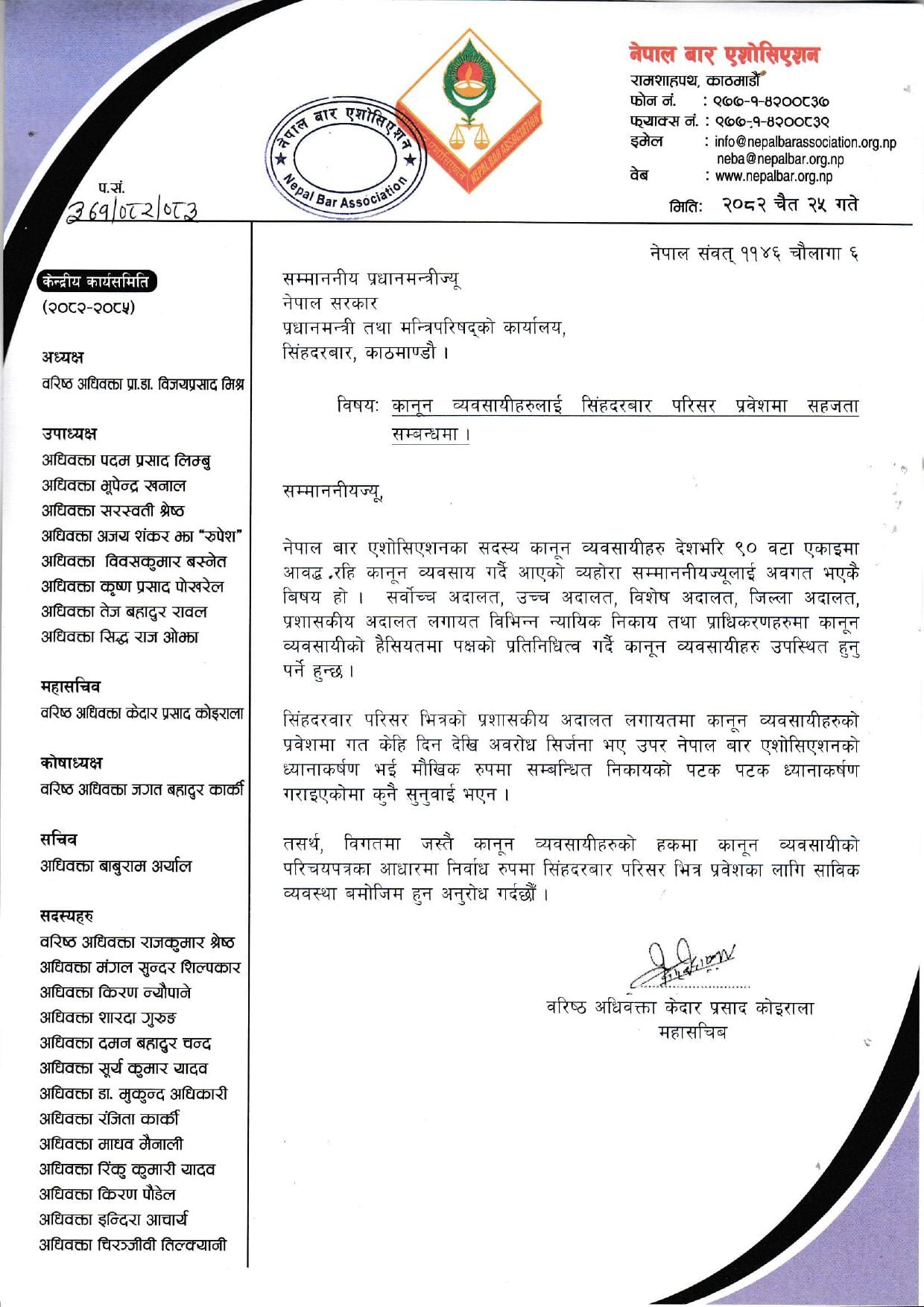
On Tuesday, the administrative court issued a notification that law practitioners must obtain permission to enter the Singha Durbar from the citizen app. Before that, they used to get admission by showing their identity card issued by Nepal Bar Council and Nepal Bar Association.
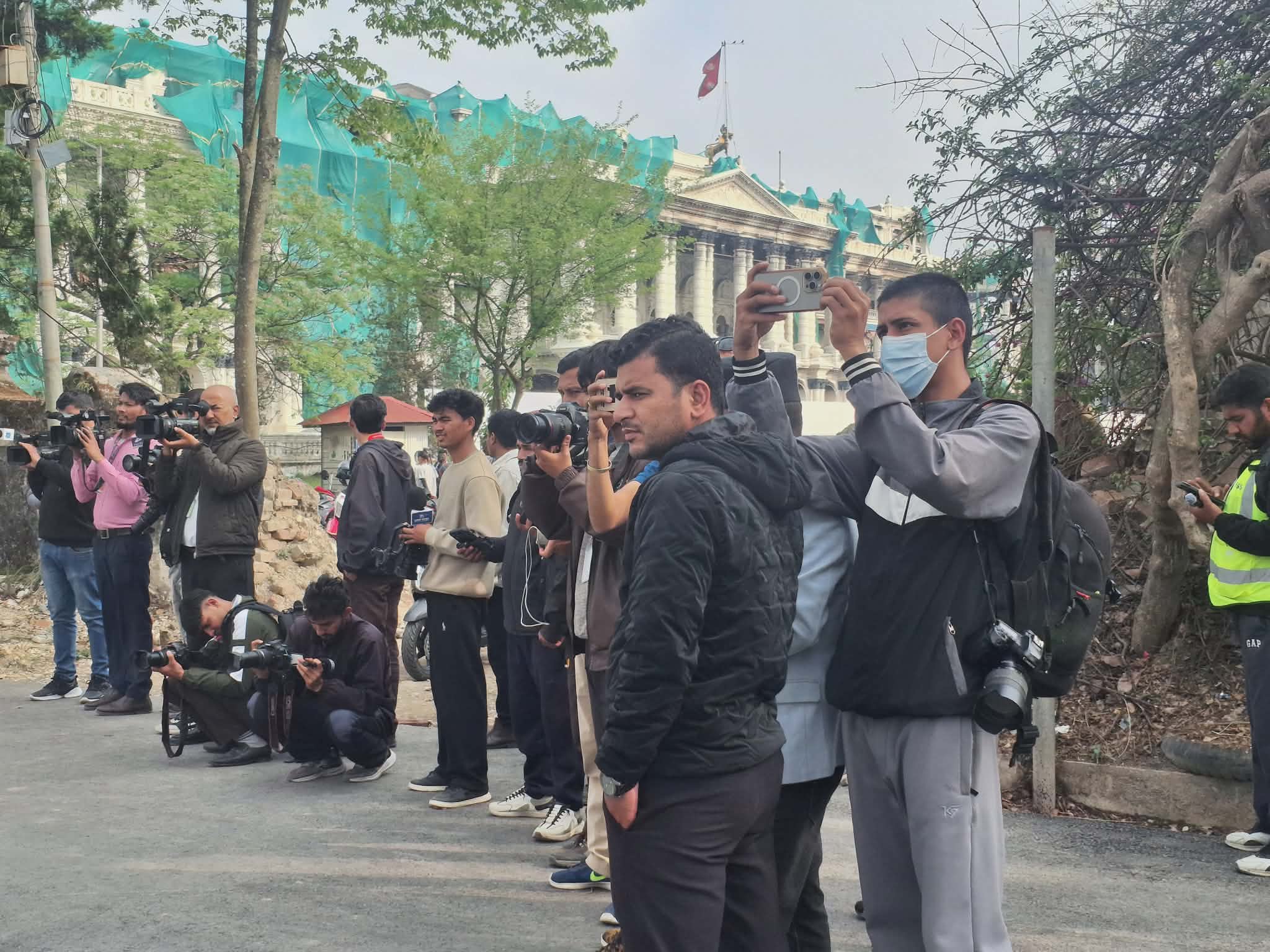
On Monday, journalist Praju Pant wrote on social network X, ‘Today, along with some friends from the media, I went to the prom office on a special basis. The security personnel sitting outside stopped the media saying that they were not allowed to go. After they asked whether they should call someone inside or not, there was no response when they sent a call message to the Prime Minister’s Secretariat.’
Journalist Pant said that she was not allowed to go inside as there was no response from the Prime Minister’s Secretariat. “It’s been two days and the answer has not come yet,” Pant, who works at Ukera.com, told Online Khabar on Wednesday afternoon.
Since 2055, the internal security of Singh Darbar has been monitored by the Singh Darbar security police. There are 19 types of gate passes for entry.
Pant’s experience is that going to the Prime Minister’s office was not so uncomfortable before. In X, she said, ‘Such undemocratic behavior of not letting go anywhere was never experienced. When Sushila Karki, KP Sharma Oli, Sher Bahadur Deuba were the Prime Minister, calls should have been made but there was a response. It was a kind of respect for the press! Today’s too much!’
Many journalists have the same experience as Pant. Law professionals have also been added to it. Nepal Bar Association has issued a statement against it.
In a statement issued by Senior Advocate Kedar Prasad Koirala, Secretary General of the Nepal Bar, it is said, ‘There was no hearing on the fact that the Nepal Bar Association has been brought to the attention of the Nepal Bar Association and repeatedly brought to the attention of the concerned bodies after the obstruction of the entry of law professionals into the administrative court including the Singh Darbar complex.’
There is a complaint of journalists who go to regular reporting that gathering parliamentary information has become difficult compared to the past. After the Parliament building in New Baneshwar was set on fire during the Genji movement last August, the meeting of the House of Representatives was shifted to the multi-purpose hall under construction inside the Singha Darbar. The meeting of the National Assembly is held in the old building of the Parliament which was previously used by the Agriculture Committee.
To go to the meeting of the National Assembly, one should use the southern gate of Singha Darwar, while to go to the meeting of the House of Representatives, one should use the gate of the Parliament Building next to the eastern gate towards Anamnagar. To reach another meeting from one meeting of the Federal Parliament, one has to go out of the Singha Darwar and cross a winding road and use another gate.
There is no provision for direct reporting in the meeting of the House of Representatives. In the last part of the meeting hall, a sitting place has been reserved for journalists. But the Parliament Secretariat has been depriving all journalists from direct reporting saying that it is unmanageable and poses a security risk. Journalists do not have an easy meeting with MPs coming out of the assembly hall.
Since 2055, the internal security of Singh Darbar has been monitored by the Singh Darbar security police. There are 19 types of gate passes for entry.
Generally, the security personnel will allow or deny entry only by looking at the entry pass or ID. But in special cases, according to the ‘above order’, the security officials say that entry is prohibited.
Citizens should be able to connect with their government and administration more easily, why is it more strict on the contrary? According to the wishes of Prime Minister Balen Shah, the entry has been tightened according to RSWP sources. Sources claim that Balen’s temperament also played a role in such a decision.
A joint secretary of the Prime Minister and Cabinet Office says that the decision to ban entry came from the top level. He says, ‘Journalists get information from press conferences or spokespersons. We will call the people who must come. Why did unnecessary people come? It has been tightened after the directive came.’
Hemraj Aryal, the spokesperson of the Prime Minister and Cabinet Office, says that no one who needs to enter has been stopped. Aryal says, ‘We have arranged for a pass to go to the Prime Minister’s office, but it is not strict.’
Ramesh Prasai, co-spokesperson of RSVP and member of the House of Representatives, says that it is not his party’s policy to deny access or hide information. He says, ‘We don’t have a policy and a decision not to give access. Has anything come from the friends who are working in security or management to ensure that the work is organized?’
The Nepal Bar has demanded to make arrangements for unrestricted entry into the Singha Darbar on the basis of the identity card of the legal practitioner. He said, ‘As in the past, in the case of law practitioners, we request them to do it in accordance with the previous arrangement for entry into the Singha Durbar premises without restriction based on the identity card of the law practitioner.’
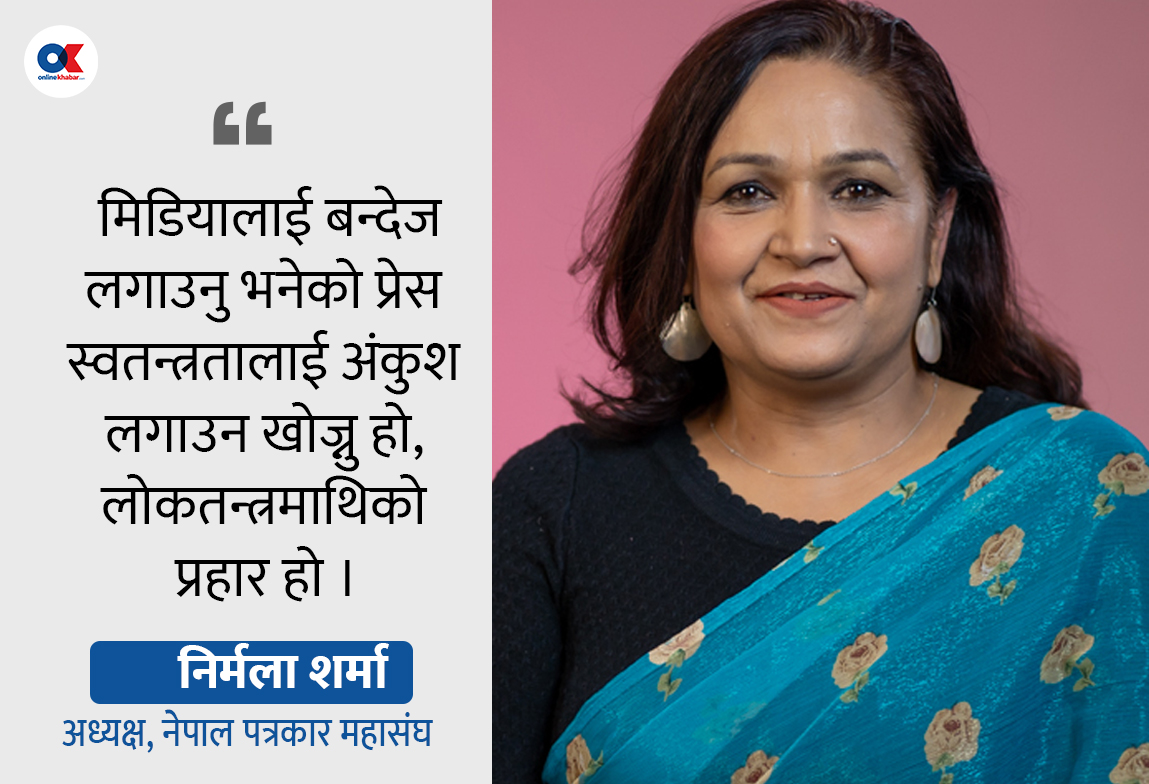
Nirmala Sharma, president of the Federation of Nepalese Journalists, says that the government has taken away the constitutional rights of democracy and people to receive information by not giving access to the media. The Federation of Journalists has a strong objection to this. This kind of behavior by the two-thirds elected government is not democratic,’ Sharma told Online News, ‘Banning the media is trying to curb the freedom of the press, it is an attack on democracy.’
Sharma, the president of the federation, insists that Singha Durbar should be open not only to media persons but to all citizens.
In the year 2073, the National Information Commission instructed the Chief Secretary of the Sanghis Parliament to make reasonable arrangements to facilitate the easy access of citizens to the information of the public bodies within the Lion’s Palace in accordance with the constitution and law. The commission gave this order after hearing the petition of Taranath Dahal and Prashant Singh.
According to journalist Pant, who was prevented from going to the Prime Minister’s office for reporting, it is natural to go to the Prime Minister’s office, but not being able to go is the character of an undemocratic government! She says, ‘It does not mean that we do not obey the existing law, but the situation of not getting entry is not good as the constitutional rights are being violated.’