23 Chait, Sunsari. Thousands of brave Gurkhas achieved heroism in the First and Second World Wars. In memory of which Ancestors Day is celebrated in Hong Kong.
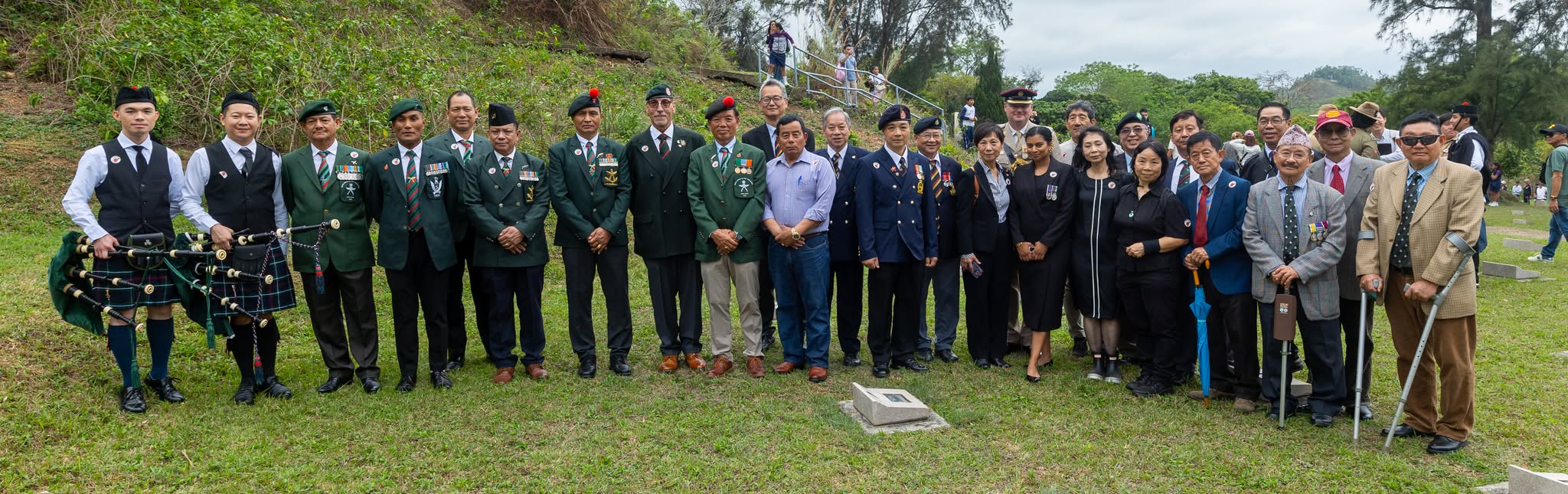
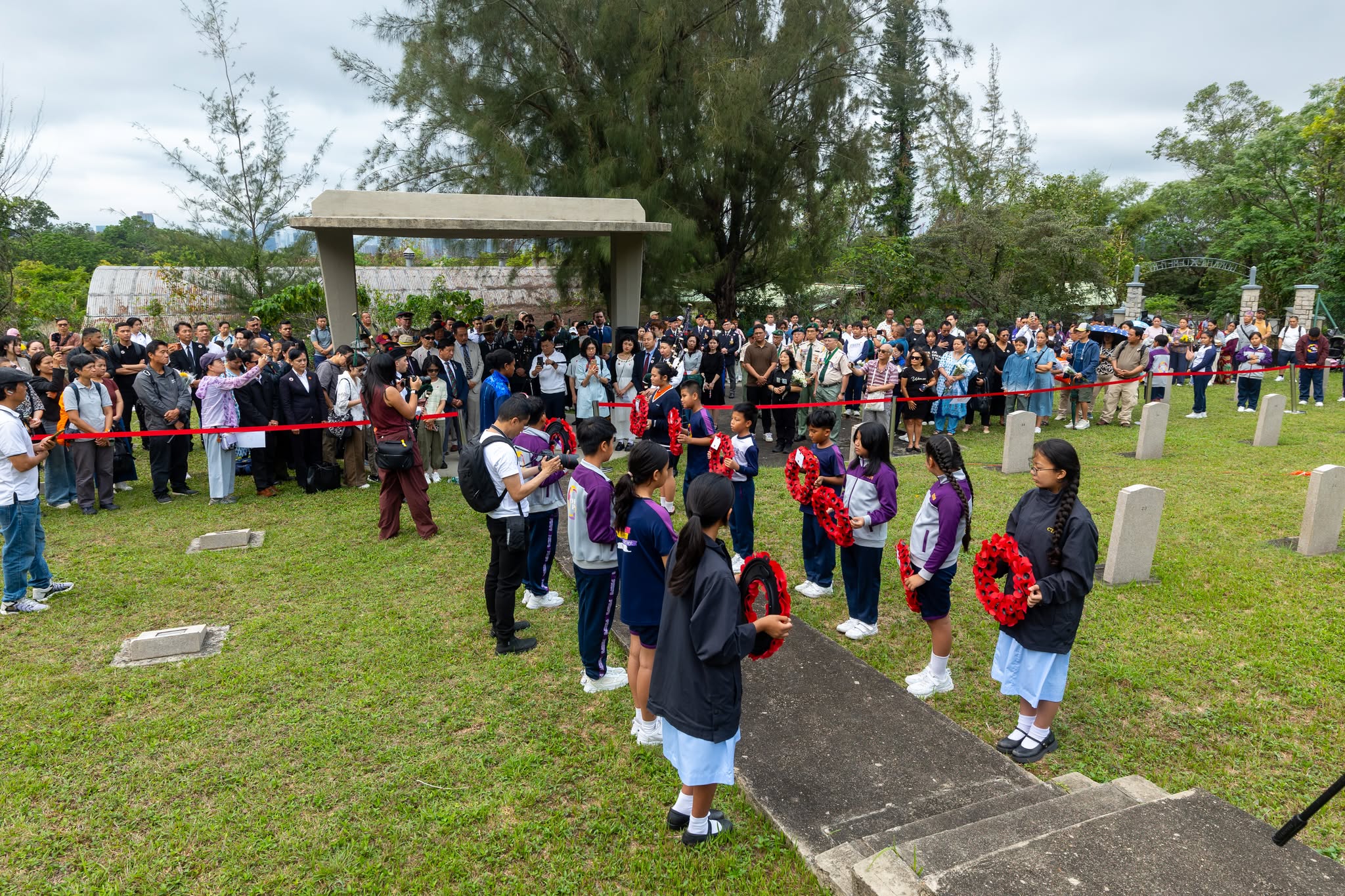
Ancestors Day was celebrated on Sunday by gathering at the Gorkha cemetery in Santin to remember the Gorkha soldiers who sacrificed their lives for world peace and security.
There was a large presence of ex-Gurkha soldiers in Hong Kong, diplomatic missions of Nepal, China-Hong Kong and the UK, educational institutions and various social organizations in the Ancestors’ Day organized by the Gorkha Symmetries Trust Hong Kong.
“In Hong Kong, every year on the first week of April, we have been celebrating it publicly as Ancestor Day in conjunction with the trust,” said Amod Rai, the president of the trust. He said that to remember is to remember the history of Gorkhas. He said that Ancestors Day will also be celebrated to inform the new generation.
Defense Attaché of the British Embassy in China Lt. Col. Paul Steinthrop and Bhojkumar Bhattarai, Deputy Consulate of Nepal in Hong Kong, British Gurkha Ex-Servicemen Association and Indian Gurkha Ex-Servicemen Association Hong Kong, Royal British Legion (Hong Kong and China Branch), British Consulate General in Hong Kong and Assistant Defense Attaché of the British Embassy in Beijing were present on the Ancestors Day. Consulate General of Nepal also participated.
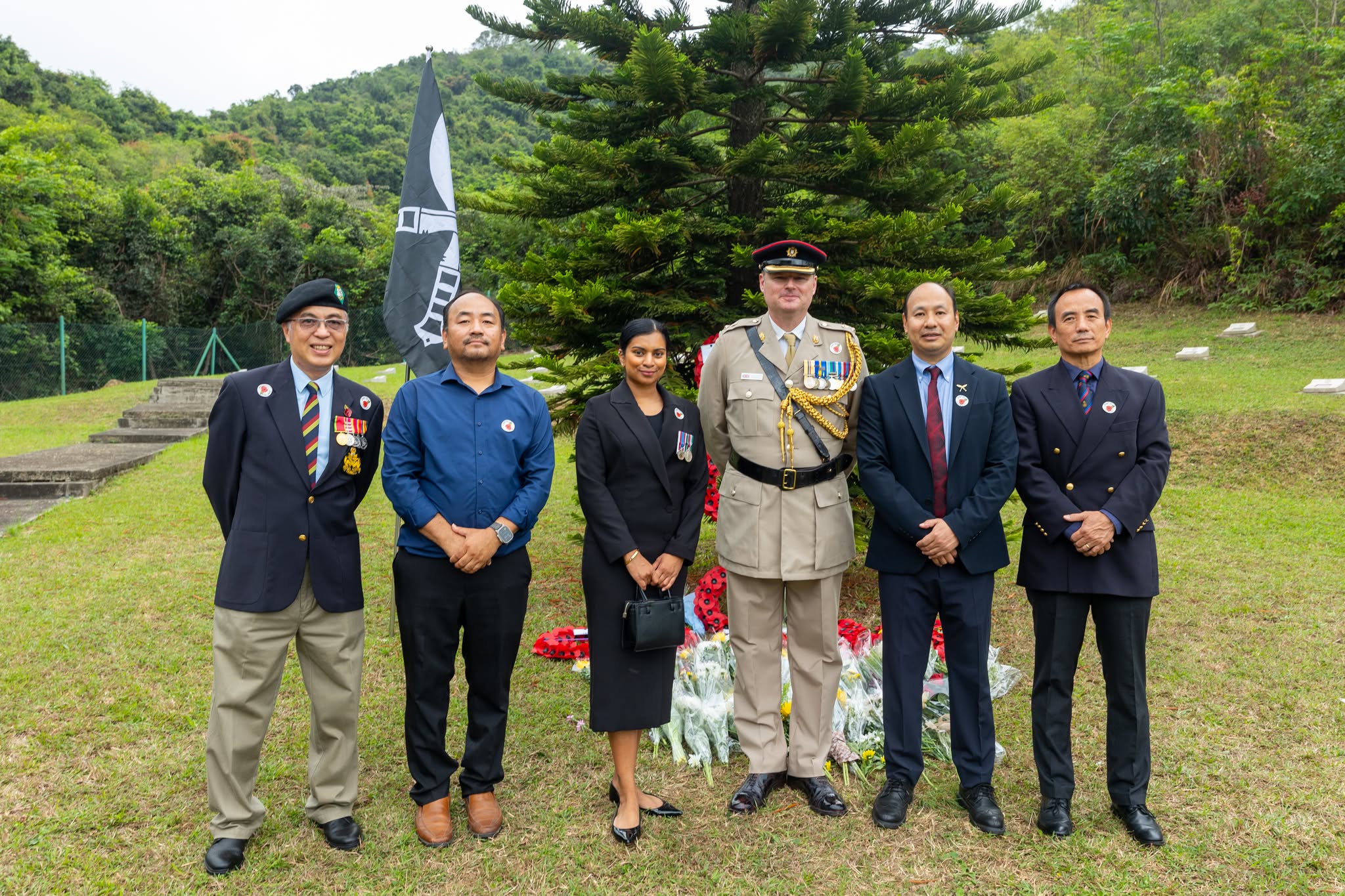
On that occasion, organizations like the Gurkha Cemetery Trust, Commonwealth War Grave Commission, The Royal Green Jackets, Ex-Gurkha Contingent of Singapore Police Force, Scout Association of Hong Kong, Hong Kong Adventure Corps, Royal Commonwealth Society and Hong Kong Ex-Servicemen’s Association paid tribute to the contribution of Gurkhas.
Students from local government educational institutions Pat Heung Central Primary School, Choi Cheung Kok Secondary School and Caritas Tuen Mun Modern Foundation Secondary School also had a significant presence in the Ancestors Day. Representatives from Hong Kong Nepalese Federation, Nepal Club Hong Kong, We Will Rise Foundation, Youth Global Network, A Few Moments Kam Tin, Hong Kong Royal Hong Kong Police Old and Bold and Kaduri Estate Limited also participated in the event.
What is Ancestor Day?
Devraj Rai, a teacher of Hong Kong’s Pat Heung Central Primary School for two decades, laments that the contribution of the world-famous Gorkhas, who were recruited according to the tripartite agreement between Nepal-India-UK, has not been acknowledged in the National Museum of Nepal.
He alleges that the Nepal government is covering up the mistakes made in history by blaming only Britain and India. “The government is hesitating to stand up in Parliament and apologize for taking responsibility for making its own citizens Gurkhas and sending them to war,” he says.
He also said that since the Nepalese government did not appreciate the contribution of the brave Gorkhali with Nepali nationality, they had to go to the places where there are mass graves of Gorkhas and celebrate their ancestor’s day.
From 1914 to 1918, during the First World War, which was fought in Europe, Africa and the Middle East, thousands of young Gurkhas from Nepal were recruited on the side of Britain.
Similarly, in the Second World War, which lasted from 1939 to 1945, the armies of 70 countries went to war. Although Nepal did not go to war with anyone, thousands were recruited as mercenaries in Britain and India. The tombs of soldiers who achieved heroism in the war are preserved in several countries.
According to Devraj Rai, who is also the secretary of Gorkha Cemeteries Trust Hong Kong, there are 23 thousand 264 cemeteries in 149 countries of the world. 16 lakh 95 thousand 174 people are buried in that cemetery. Of those, 211,929 people have not yet been identified as to whose graves they belong to. “Most of the unidentifiable tombs may belong to Gorkhas,” he says.
According to him, the Commonwealth War Graves Commission, established in 1917, has been protecting the graves of soldiers who died in the war.
According to the commission’s policy, the tomb should be permanent, uniform and non-discriminatory. Its conservation costs are borne by the governments of Britain, Canada, New Zealand, South Africa, India and Australia.
According to Rai, who has also written a book by researching which countries of the world there are Gorkha tombs, the Gorkha tombs were found only after the fall of the Berlin Wall in 1989 in Zarendorf, East Germany.
In India’s Delhi and Turkey’s Gallipoli, where there are Gurkha mausoleums, the sick weather is affecting the mausoleums. In France and Belgium, it is becoming difficult to protect tombs from annual floods. At Tammi Camp in Hong Kong’s Casino Line, there are more than 580 graves of Gurkhas who lost their lives during the British military service in a large area.
The War Graves Commission has been doing the security and protection of the cemetery. In Egypt, due to the lack of water, the cemetery is in a state of drying up. Rai also said that many Gorkha grave sites in different parts of the UK are on private land, so there are difficulties in conservation.