News Summary
Generated by OK AI. Editorially reviewed.
- The National Statistics Office has estimated that Nepal’s economy will expand by 4.5 percent in the second quarter of the current fiscal year 2082/83.
- The office noted that the increase in electricity production, financial services, livestock production and tourist arrivals contributed to the economic expansion.
- Although there was a contraction in the construction and mining sectors, the data showed that there was an increase of 22.75 percent in the electricity and gas sector.
24 March, Kathmandu. It is estimated that the economy will expand by 4.5 percent in the second quarter of the current fiscal year 2082/83 (October-Pus).
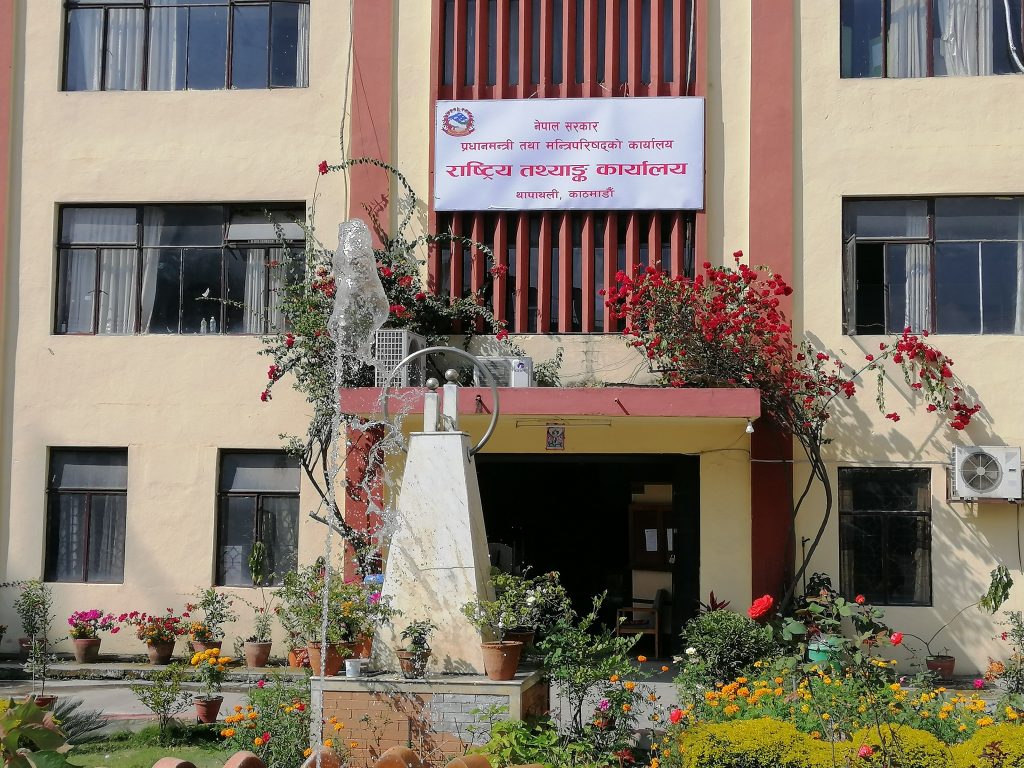
The National Statistics Office made this estimate while publishing the quarterly national accounting data. When estimating the quarterly accounts, the data is made public, compared to the same quarter of 2081/82, without adjustment for seasonal effects.
According to the office, the increase in electricity production and distribution, deposit collection and loan flow, non-life insurance premium collection, animal production, fruit and vegetable production, business services, and the increase in the industrial sector including tourist arrivals have contributed to the expansion of the economy.
During this period, according to the industrial classification, all the 18 sectors are at a positive growth rate. The government’s target was to achieve an economic growth rate of around 6.5 percent this year. However, due to the decline in the import of construction materials, rice crop production and the production of some domestic goods, the growth rate of this quarter has slowed down, according to the analysis of the office.
On the other hand, seasonally adjusted data means that the economy has expanded by 2.04 percent in the second quarter compared to the first quarter of the current year. During this period, out of 18 industrial classifications, there has been an increase in 16 sectors and a contraction in 2 sectors.
Compared to the first quarter, the data showed that there was a contraction in construction and mining and quarrying in this quarter.
Boom in electricity and gas
The agriculture sector has the largest share in Nepal’s economy. However, the growth rate of the same sector has expanded by only 2.21 percent compared to the same period last year.
According to the office, the impact of the reduction in paddy crop has been seen in agriculture. During this period, the highest growth is seen in activities related to electricity and gas.
An increase of 22.75 percent has been achieved in this sector. Financial and insurance related activities, transportation and storage, accommodation and food, wholesale and retail trade have recorded an expansion of 12.51, 9.65, 5.18 and 4.11 percent respectively.
The growth rate of wholesale and retail trade, which occupies the second largest share in the economy, is estimated to be 4.11 percent. The increase in domestic production and import of commercial goods has contributed to the growth rate of this sector.

During this period, the growth rate of water supply, sewage disposal, waste management was 0.55 percent, public administration and defense and compulsory social security was 1.11 percent and education was only 1.16 percent.
In the second quarter of the year 2079/80, the economy expanded by 1 percent. Since then, the economic growth rate has been almost constant in every quarter. According to the office, the economic growth in the first quarter of the current year was 3.24 percent.
Compared to the previous quarter, the highest growth rate has been seen in transportation and storage services in this quarter. The growth rate of the service is 6.20 percent. Agriculture has expanded by 2.48 percent, electricity and gas by 3.16 percent, finance and insurance by 3.82 percent and education by 1.22 percent.
Dhundiraj Lamichhane, spokesperson and deputy chief statistics officer of the office, informed that there was a decrease of 0.59 percent in the construction sector and 0.85 percent in mining and quarrying.
According to him, the quarterly accounting estimates are made public within 90 days of the end of each quarterly period. The office has been publishing such quarterly national accounts estimates since 2067/68.
Due to the Genji movement this year, there was confusion in the economy during the first quarter. In the second quarter, the elected government made various efforts to speed up the economy.