News Summary
Generated by OK AI. Editorially reviewed.
- On Monday, 11 MPs participated in the House of Representatives and wished the newly elected Speaker Dol Prasad Aryal.
- RSVP MP Manish Jha said that the Parliament should be a Gurukul and a University and the Speaker should play a neutral role.
- Nepali Congress MP Arjunnar Singh KC explained the importance of neutrality and prerogatives of the Speaker from the 1642 incident in Britain.
24 March, Kathmandu. An hour-long special session was held in the House of Representatives on Monday and 11 MPs participated in it. Everyone congratulated the newly elected Speaker Dolprasad Aryal. He also suggested the Speaker to play a neutral role in the future.
While congratulating Speaker Aryal, the parliamentarians also expressed their fear that the parliament will be weak in the future, that the government will not listen to the voice of the parliament, or that the voice of the weak opposition will not be heard.
What should be the role of the Speaker to prevent this from happening? Parliamentarians of the ruling party Rashtriya Swatantra Party (RASWPA) also appeared to answer this question.
RSVP MPs Manish Jha and Ganesh Parajuli as well as Nepali Congress MP Arjun Narsingh KC discussed the privileges of MPs and Speaker’s privileges. They presented the international practice and examples of Nepal’s past as to what should be the role of Speaker and House of Representatives members in the future, which helped MPs Jha, Parajuli and KC stand out.
The question of the ruling party – why the previous ‘row’ is empty ?
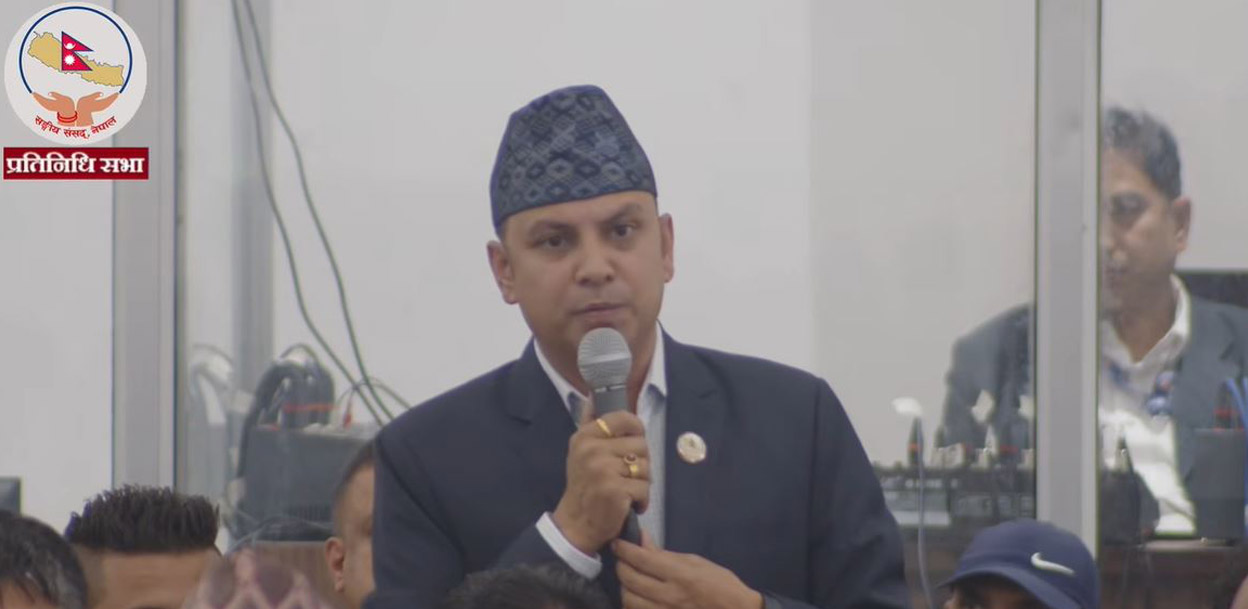
At a special time, the fourth number spoke was MP Manish Jha of RSVP. The front row of the auditorium was empty as he rose from his seat to speak.
Separate benches have been arranged for the ruling party and the opposition in the assembly. There is a separate wave for government, where the prime minister, home minister and ministers reside. The leaders of the parliamentary party of the party remain on the wave of the party. However, Prime Minister Balendra Shah (Balen) was not present at Monday’s meeting. Former Prime Minister Pushpa Kamal Dahal was not even seen.
Pointing out that the ‘row’ in front is empty, RSVP MP Jha said, ‘The House is not a chautari or a tea shop. It doesn’t mean that I come wherever I want, I speak as I want, I stay as I want, and I don’t want to leave.’
What should the parliament be like? According to Jha, ‘Sadan should be Gurukul. Should be a university. I should come with questions, proposals and prepare a presentation, where people’s questions find existence.’
In other words, the MP sought the dignity of Parliament. What is the role of the speaker in this?
In his experience, ‘the previous House was confined to Khumaltar, Baluwatar, Balkot. Only the numbers were counted, the theory remained weak.’
Former Prime Minister Pushpa Kamal Dahal ‘Prachand’, KP Sharma Oli and Sher Bahadur Deuba were referred to as Khumaltar, Baluwatar and Balkot. Prachanda lived in Khumaltar and Oli lived in Balkot. He pointed to the official residence of the then Prime Minister as Baluwatar.
In other words, MP Jha insists that there should be no interference by Baluwatar, i.e. the Prime Minister, in the Parliament again. Whereas, currently, the government is led by Balendra Shah (Balen) of RSVP.
‘Let the question exist‘
Now MP Jha believes that the House will be based on principle.
Jha recalled that the best parliament in South Asia was envisioned before the February 21 elections. According to him, the best parliament in South Asia could be made.
‘The house we envisioned has been realized. Now it’s time to practice’, Jha said, ‘now it’s time for rituals, principles and culture.’
He urged that everything should be done for this and the existence of the Parliament should be confirmed.
He added, ‘This is what the House should remember – if people’s questions do not exist here, the people will enter the House. which we saw last August 24.’
The Genji movement took place on the 23rd and 24th of last year. Parliament building was also burnt during the protest. The parliament sitting at the International Convention Center in Naya Baneshwar is sitting at a new place due to the fire. The meeting of the House of Representatives is being held in the multi-purpose hall of the new parliament building at Singha Darbar.
Remembering the Genji movement, he also drew the attention of the government that the questions raised in the parliament should exist. In the elections held on the foundation of the Zenji movement, the RSVP got nearly two-thirds of the votes. It has formed a powerful government by winning 182 seats.
Explanation of the role of the communication sector
The parliamentarians of RSVP drew the attention of the government that the government can show importance when the opposition is weak. In this process, MP Jha explained the role of the media sector and described the character of politicians.
MP Jha recalled the 2015 election and the parliamentary practice at that time. ‘In the year 2016/017 there was a government led by BP Koirala. BP once called journalist Madanmani Dixit and said – the opposition in the House is very weak. So make us aware, make us aware. I will introduce myself in a critical manner.’
This reference has been mentioned at a time when there is a powerful government of RSVP and the government has been accused of being unfriendly to the media. The government has decided not to transmit government advertisements through private media. While this was being opposed, RSVP MP Jha recalled the role of the media sector in Parliament.
Member of Parliament Jha remembered BP and said, ‘They started publishing a weekly called Review with money from the government.’
Regarding the fact that the opposition should be strong, MP Jha Krishna Prasad Bhattarai also recalled that Bharat Shamsher was given the status of leader of the opposition party.
In India in 1988, Rajiv Gandhi sent the leader of the opposition party Atal Bihari to the UN delegation and helped him in the treatment of his kidney.
Presenting these examples, MP Jha said, ‘He will not show arrogance when the ruling party is getting stronger in the House. We have seen the results of arrogance. August 23 should be remembered. So we have to be generous. To show rites. To show the principle.’
‘The neutral Speaker is ready to hang.
Newly elected Speaker Aryal has repeatedly expressed his commitment to be neutral. He promised to be fair and play a co-ordinating role before entering the agenda of the meeting of the House of Representatives on Monday. However, the MPs have drawn the Speaker’s attention.
While everyone is looking for a fair and neutral Speaker, Nepali Congress MP Arjun Narsingh KC tried to answer the question of how such a speaker would be.
In KC’s eyes, the speaker should be able to take care of his privilege. Be prepared for any adversity. And only the Speaker can become neutral.
For this, Casey narrated a 384-year-old incident in Britain.
According to Casey, ‘In 1642, i.e. 384 years ago today, Charles I was the despotic king in Britain. At that time, five powerful anti-monarchy parliamentarians vociferously opposed the king in parliament. After knowing this, the king entered the parliament with four hundred commandos.’
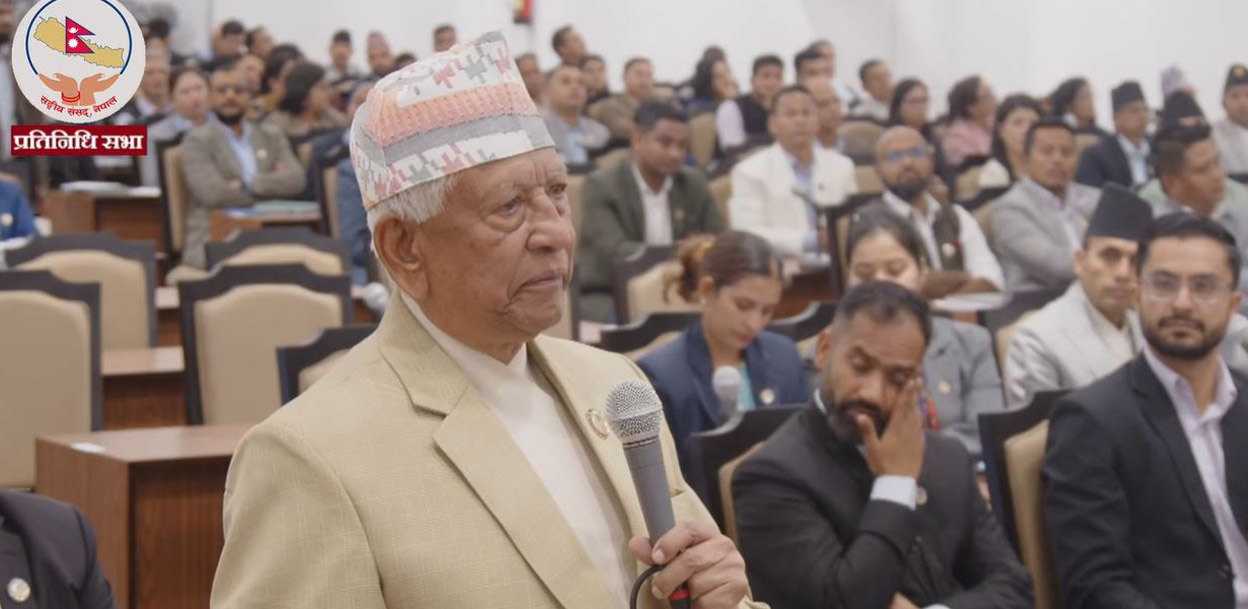
Then King Charles said to the speaker – who are those five people? The Speaker knelt down and said – Your Majesty, I am ready to die, but I have neither eyes nor my tongue in this parliament”, KC told the meeting of the House of Representatives on Monday.
According to him, the speaker replied to the king that ‘I am only a servant to follow what the Parliament of Great Britain directs’.
MP Casey says, ‘The Speaker, I cannot tell you the name of that MP, is a very big landmark in the history of the democratic movement and the role of the Speaker.’
After this incident in 1642, a conflict broke out between Parliament and Charles I. As a result, Charles was hanged in 1649.
‘…Charles was hanged, beheaded in the street,’ Casey said, illustrating what could happen when the speaker is neutral, ‘so the responsibility that the speaker has, that responsibility is very important.’
Giving this example, KC told Nepal’s newly elected Speaker Aryal, ‘The speaker should protect the privilege of the speaker.’
He suggested to look at the method and practice for the issue of what are the prerogatives of the Speaker, ‘There is a constitution, there is a regulation of the House of Representatives. There are many precedents and beliefs of the past. There are documents of universally established recognition.’
KC added, ‘Democracy can be made alive without being divided into any parties or oppositions in a fair way.’
KC also tried to remind the democratic character of a politician. In the 2015 elections, the Nepali Congress won two-thirds majority. The government was formed under the leadership of the Congress. At that time the main opposition was the Gorkha Parishad.
According to KC, after the election, Bharat Shamsher, who was leading the Gorkha Parishad, himself was ready to join the Nepali Congress. However, BP did not agree.
KC said, ‘Bharat Shamsher himself was ready to join the Nepali Congress. But BP stopped and said – I am ready to give all the concessions, but the parliament cannot be democratic without an opposition in a vacuum. That’s why you should stay in the opposition.’
In other words, KC urges that even the ruling party should realize its weakness and envisage a strong opposition to practice mature democracy, and for this, good politicians should play a role.
Parajuli raised five questions
Another MP who will be heard in the House of Representatives on Monday is Ganesh Parajuli. He was also in the dissolved House of Representatives. He, who is a second time MP, spoke for the first time in his second term on Monday.
Remembering those who were martyred in the Genji movement on August 23 and 24, Parajuli said that the upcoming journey should also be according to the wishes of the youth. For this, two-thirds of the government asked what role should be played.
1. The principle of separation of powers should be taken into account
The need for balance between the three parts of the state was remembered by MP Parajuli early on.
He said, ‘I don’t need to explain here today the bitter experiences we have had because we could not protect the difference between the executive and the legislature separately and protect the dignity of the legislature.’
That is, he urges the heads of all the three branches to take care of the principle of separation of powers and act accordingly.
He said that in the past there was partisanship in all the three parts, he emphasized that there should be improvements in the future.
In this, he also pointed out the role of the Speaker, ‘I hope that the Honorable Speaker will write history in such a way that all the bitter things of the past will be written in golden letters.’
2. Let the government listen to the MPs
He requested that the government should be responsible along with the speaker. He believes that the government should give importance to the parliament for this.
“In this honorable house, all the problems, suggestions and voices of the people raised by the sovereign parliamentarians on behalf of the people at emergency time, zero time and special time should be heard by the state agencies and ministries,” he said.
The government is led by the RSVP. However, Parajuli tried to warn.
3. Have a timely pre-budget discussion
The government should bring the budget for the next financial year on the 15th of May. Before that, he requested that the government’s priorities should be discussed in the parliament.
He said, ‘The time to bring the financial budget is approaching. For that, we should discuss the pre-budget in time.’
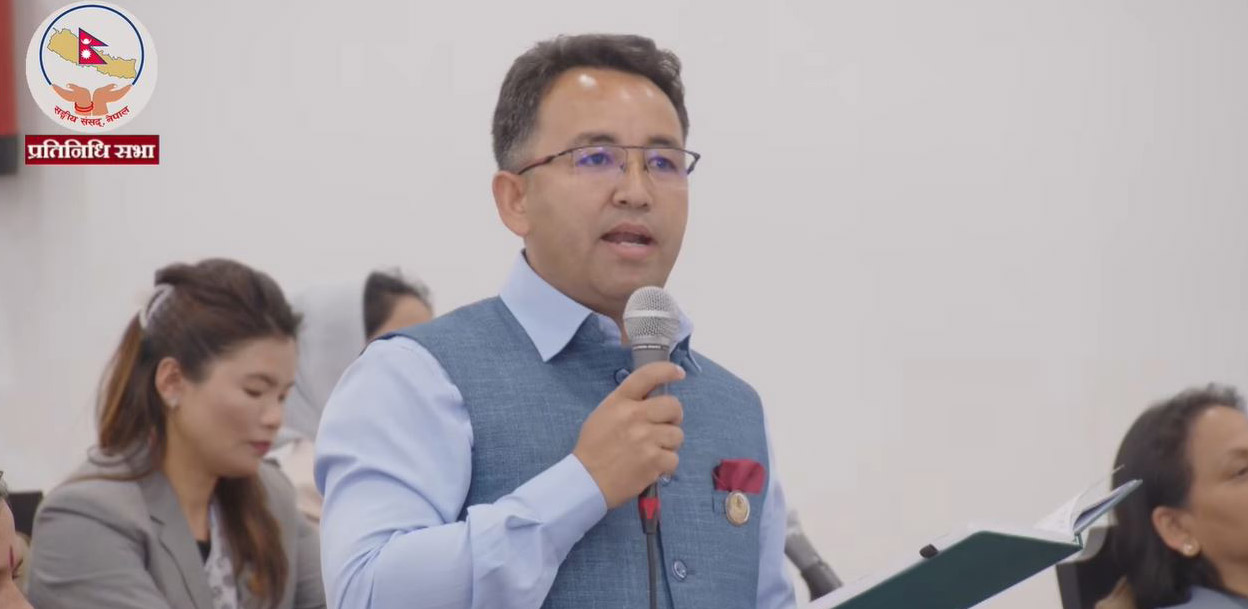
He said that the goal is that the sovereign parliamentarians who are elected and approved by the sovereign people can raise the voices of their people and their geography.
“All the issues raised by the parliamentarians should be included in the budget so that this government, this house and the entire Nepali people can feel their ownership in this great campaign that has changed through the vote revolution,” Parajuli urged.
4. Do not be dominated by interest groups
His other request is that no interest group should be influenced while the Parliament is working.
Remembering the tenure of the disbanded House of Representatives, he said, ‘When the Federal Civil Code was being made, there was tampering. There was an act of tampering with the laws made by the sovereign parliamentarians.’
A Parliamentary Committee was formed in the dissolved House of Representatives to find that there was manipulation of interest groups and the involvement of responsible officials in the creation of the Civil Code. It held the then leadership of the State Order and Good Governance Committee, the staff from the secretary to the chief secretary of the parliamentary committee responsible for passing the bill.
MP Parajuli urges that interest groups should not dominate the lawmaking so that such bitter feelings of the past should be remembered again.
“In the coming days, no one should dare to tamper when the sovereign parliamentarian is making laws on behalf of the people,” said Parajuli.
He also emphasized that training and orientation programs are necessary in some cases while the MPs are making laws on behalf of the people and the Federal Parliament Secretariat should make arrangements for this.
5. MPs should not knock on the minister’s door
According to MP Parajuli, any MP should be able to pretend that he can raise his issue in Parliament.
“Let everything be completed after keeping it in the parliament,” he said, “The sovereign parliament should not ask at the door of any minister or ministry whether the issues raised by them have been addressed or not.”