News Summary
Generated by OK AI. Editorially reviewed.
- The Backbench Business Committee of the British Parliament debated the issue of Gurkha veterans for about an hour and 18 minutes.
- The MPs said the decision not to give equal pension to Gurkha soldiers was discriminatory, unjust and shameful.
- The UK government has committed to further funding health and social care in collaboration with Gurkha veteran representatives.
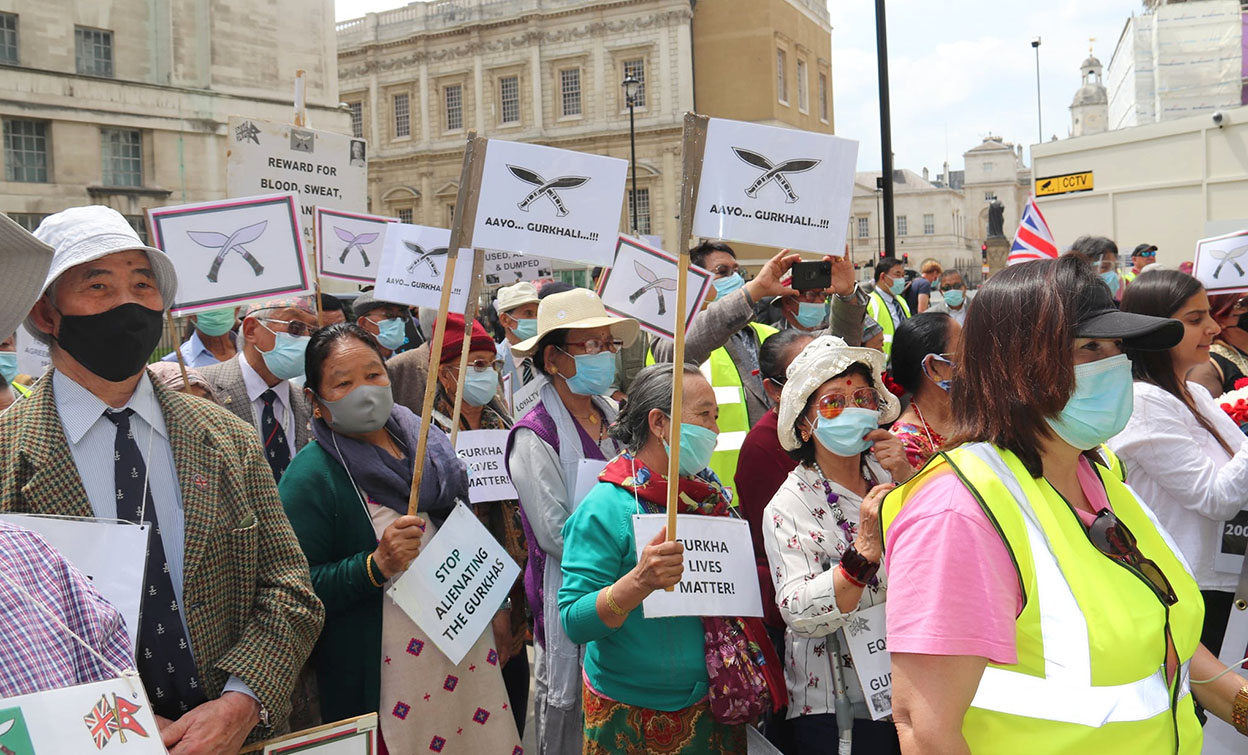
London. At a time when the government-level tripartite talks on the former Gurkha issue have reached a complicated stage, the issue has been debated in the British Parliament.
The Backbench Business Committee of the Parliament debated for about an hour and 18 minutes on the title ‘Support for Gorkha Veterans’ in the House of Commons on Thursday, March 26, in which about one and a half dozen MPs expressed the opinion that former Gurkhas should not be deprived of equal rights.
In appreciation of the bravery, loyalty and sacrifice of the Gurkha soldiers who have been fighting for Britain for more than two centuries, MPs have requested the British government to treat them respectfully.
The Backbench Business Committee gives Members of Parliament the opportunity to bring forward debates of their choice. It is the first business committee of any kind established by the House of Commons.
Liberal Democrat MP Cameron Thomas, who brought the debate to Parliament, presented the example of some ex-Gurkha soldiers and presented the fact that their lives have become very difficult due to the unequal treatment of the British in service facilities.
He mentioned that the discrimination against the Gurkhas, who have been dedicated to this country for more than 200 years, is a matter of shame, saying that even the ex-Gurkhas who were dismembered during their service did not get the pension they deserved.
Democratic Unionist Party MP for Strangford, Jim Shannon, who has been an MP since 2010, recalled that the Gurkhas paid a great personal price for the United Kingdom and gave their all.
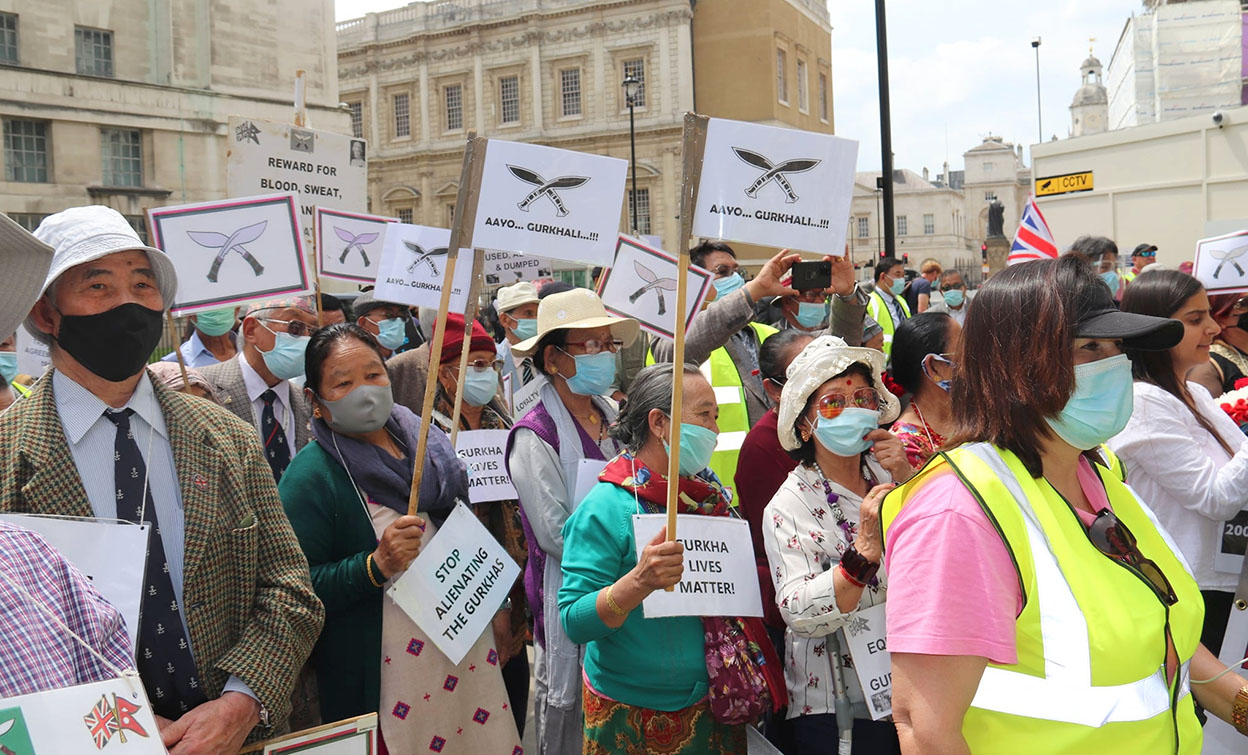
Labour’s MP for Rochester and Stroud, Lauren Edwards, thanked Tewkesbury MP Cameron Thomas and the backbench business committee for facilitating an important debate, and discussed her constituency’s long and proud history and relationship with the Gurkha community and Nepal.
Many Gurkha veterans living in this country receive only about a third of the pension given to British soldiers of equivalent rank. As my constituent Sumendra Rai told me, this division is deeply unjust’, Lauren said, ‘It institutionalizes inequality between soldiers who wear the same uniform, follow the same orders and risk their lives in the same conflict.’
She also said that over 100 Gurkhas live in Medway and they represent a large community of ex-British Gurkha soldiers who have served this country.
In the debate, she added, ‘Also, they are an important community of Nepali heritage. Like many members here today, I too have written a letter to the veteran minister, especially on behalf of the Gorkha Nepali community in Medway and Kent.’
Emphasis on solving the problem of Gurkha veterans
During the debate, Hayes and John McDonnell, Labor MP for Harlington, argued that the British government cannot always enact new laws or grant them on a restorative basis in the ex-Gurkha pension case, but said that discriminatory treatment of Gurkhas should not be allowed.
He told the reality that the Gorkhas were living in poverty in both Britain and Nepal when the border was drawn in 1997, and the Gorkhas were homeless and in economic crisis in their own communities.
During the debate, Slough Labor MP Tanmanjit Singh Deshi said that the service and sacrifice of Gurkha soldiers should never be underestimated or ignored and said that the discrimination between Commonwealth and Gurkha soldiers regarding their pensions is reprehensible.
Singh said that the British government should not only properly recognize the bravery of the Gurkha veterans and their achievements, but should also treat them with respect in the matter of their pension.
While Britain is maintaining a stand of not giving equal pension, now the ex-Gurkhas have agreed to accept the 11-point demand that includes an ‘affordable solution’ i.e. a financial package instead of equal pension.
He was of the opinion that the British government should cooperate with the new Prime Minister of Nepal to solve the problem of the Gurkha veterans who have been suffering for a long time.
Tiverton and Mindhead Member of Parliament Rachel Gilmore praised the Gurkhas. “Wherever the British flag is hoisted, you will often find loyal Gurkhas,” she said, “every time they have proved themselves to be one of the best soldiers to ever wear the British uniform.” In fact, this reputation is older than them.’
She said that as much as Gurkhas deserve respect, they also need justice.
What did the British Minister of State for Defense say?
Responding to the MPs, Minister of State for Defense Luke Pollard said the government has worked closely with the Gorkha veteran representatives and continues to listen to their priorities and concerns. Veteran minister Louis Sanders Jones recalled that he met the G10 group of Gurkha representatives last week and promised to meet again soon.
Minister Pollard also said that the Gorkha veteran representatives strongly supported the issues that were most important to them, their health and social care.
Minister Pollard stated that in 2019, the 40 million pounds of additional medical and health service funding committed by the previous government has been increased by 24 million pounds, and the British government has agreed in principle to extend that support after 2029.
A few days ago, 19 MPs belonging to the All Party Parliamentary Group (All Party Parliamentary Group) Nepal also requested the government to address their issues respecting the service and sacrifice of the Gurkhas.
MPs from Aldershot and Farnborough region and MPs including All Party Parliamentary Group Nepal President Alex Baker wrote a letter to British Veterans Minister Louis Sanders Jones and made this request.
Former British Gurkhas have been fighting with the British government for almost 35 years for equal rights. While Britain is maintaining a stand of not giving equal pension, now the ex-Gurkhas have agreed to accept the 11-point demand that includes an ‘affordable solution’ i.e. a financial package instead of equal pension.